Behavioral health organizations rarely struggle because they do not value training. They struggle because requirements are spread across orientation packets, email reminders, spreadsheets, supervisor notes, and credential files. When each role has different learning expectations, it becomes easy to miss annual refreshers, duplicate work, or discover a gap only when an audit, payer review, or staffing change puts pressure on the team. Training matrix software gives HR leaders a clearer way to organize role-based requirements and keep evidence connected to the people who need it.
Key Takeaways
What Is Training Matrix Software?
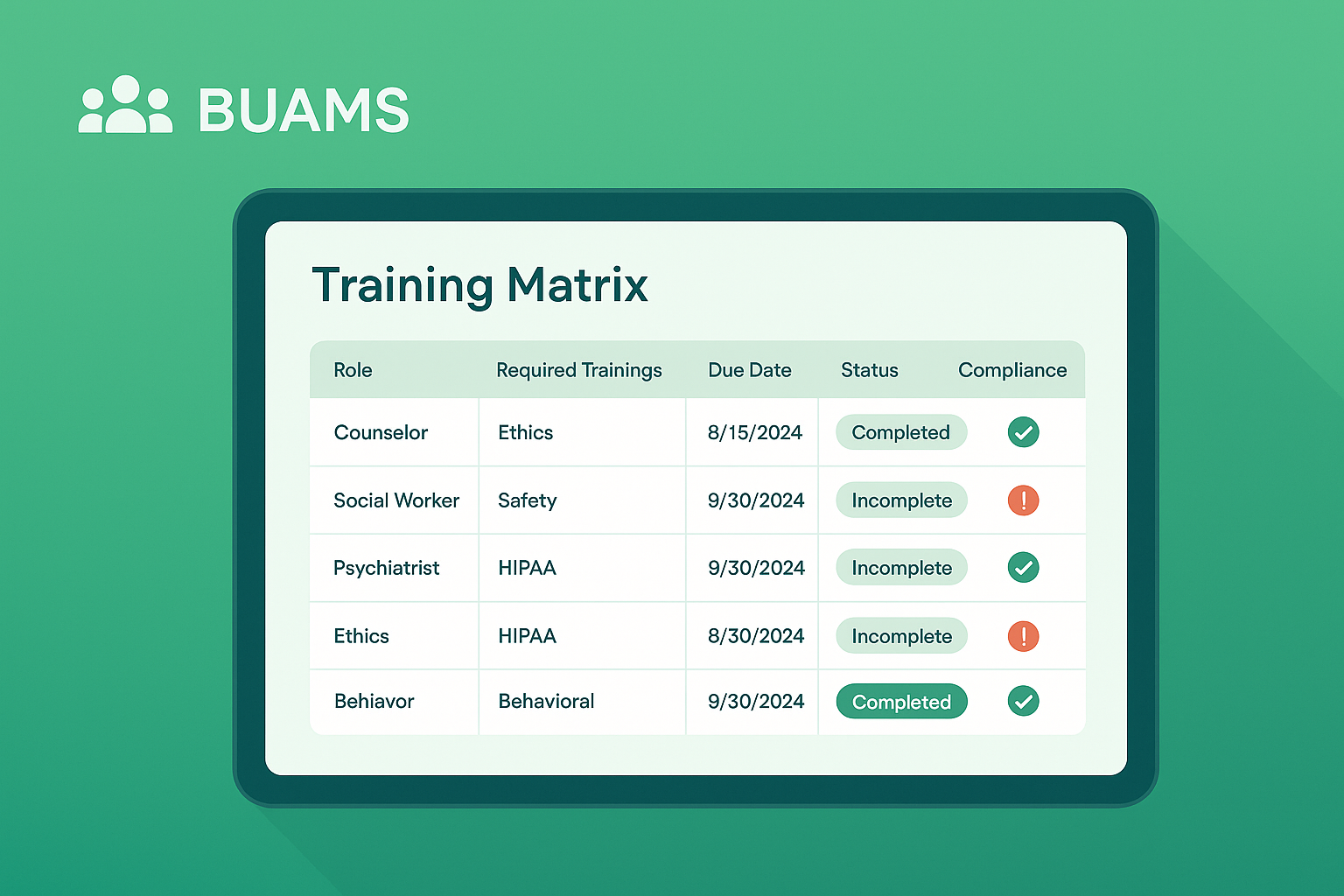
Training matrix software is a system that shows which employees need which trainings, why those trainings apply, and whether each requirement is complete, overdue, or coming due soon. In behavioral health settings, the matrix often needs to account for more than a simple orientation checklist. A licensed clinician, a residential counselor, a supervisor, and an administrative coordinator may all have different annual requirements, policy acknowledgments, and role-specific learning obligations.
Instead of relying on static spreadsheets, a modern training matrix gives HR and operations teams a live view of assignments by role, site, department, or employment status. It can also connect completion evidence, expiration dates, and notes so staff are not chasing documentation across multiple folders.
Why It Matters for Behavioral Health Providers
Behavioral health organizations face a mix of workforce realities that make training oversight harder. Teams may operate across outpatient, community-based, residential, and administrative settings. Some staff work part time, some travel between programs, and some take on hybrid duties that change what they need to complete. Meanwhile, agencies must often show that required training happened on time and that documentation is easy to retrieve.
Without a clear matrix, HR teams end up spending too much time answering basic questions. Which employees still need de-escalation training? Who missed a policy update after moving into a supervisory role? Which program is carrying the most overdue items? Those questions are manageable with ten employees and quickly painful with fifty, one hundred, or more.
A structured matrix helps providers move from reactive cleanup to proactive planning. That matters for compliance, but it also matters for operations. Staff can start faster, supervisors know what is outstanding, and leadership gets a better picture of organizational readiness.
What to Look for in a Training Matrix System
Role-Based Assignment Logic
The strongest systems let teams define requirements by job title, license type, department, location, or program. That makes onboarding and internal transfers much easier because required learning can follow the employee’s actual role rather than a generic checklist.
Due Dates and Renewal Tracking
Many training obligations are not one-time tasks. Annual refreshers, recurring safety topics, and periodic policy reviews need a visible cycle. Look for a system that can track original completion dates, renewal windows, and upcoming deadlines before they become urgent.
Documentation Attached to the Requirement
Completion data is more useful when proof is stored with it. Certificates, sign-in sheets, policy acknowledgments, and supervisor confirmations should be easy to link to the assigned requirement. That helps during audits and reduces the back-and-forth between HR, supervisors, and compliance staff.
Exception Handling
Behavioral health workforces are rarely uniform. Leaves of absence, waived requirements, temporary assignments, and delayed start dates all happen. A good training matrix system should support exceptions without forcing the team to break the process or maintain a shadow spreadsheet on the side.
Useful Reporting
Reporting should answer practical management questions. HR leaders should be able to see overdue training by site, expiring items by month, and completion rates by team or role. That visibility supports staffing decisions and makes compliance meetings more productive.
Common Problems a Matrix Helps Solve
How BUAMS HR Helps
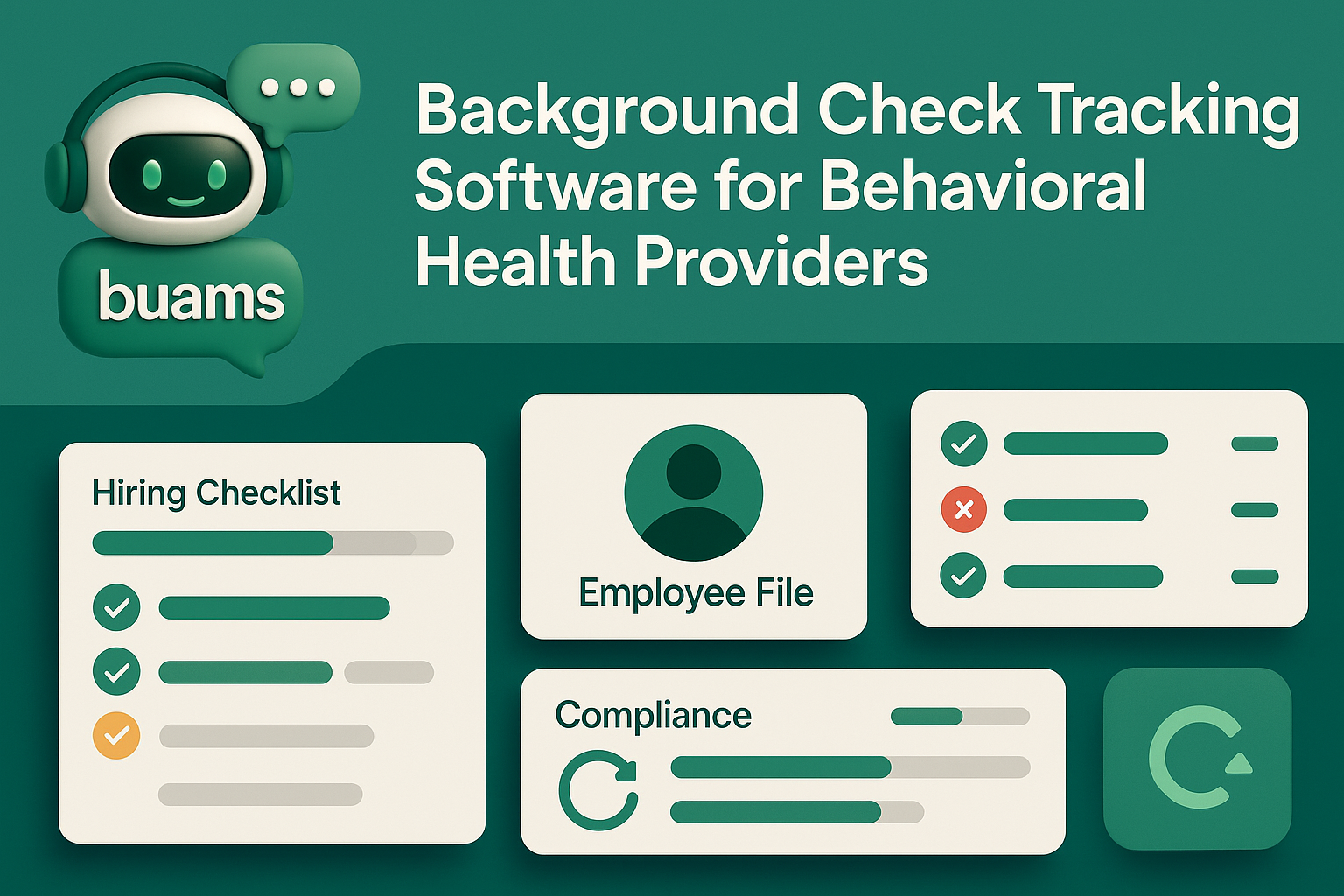
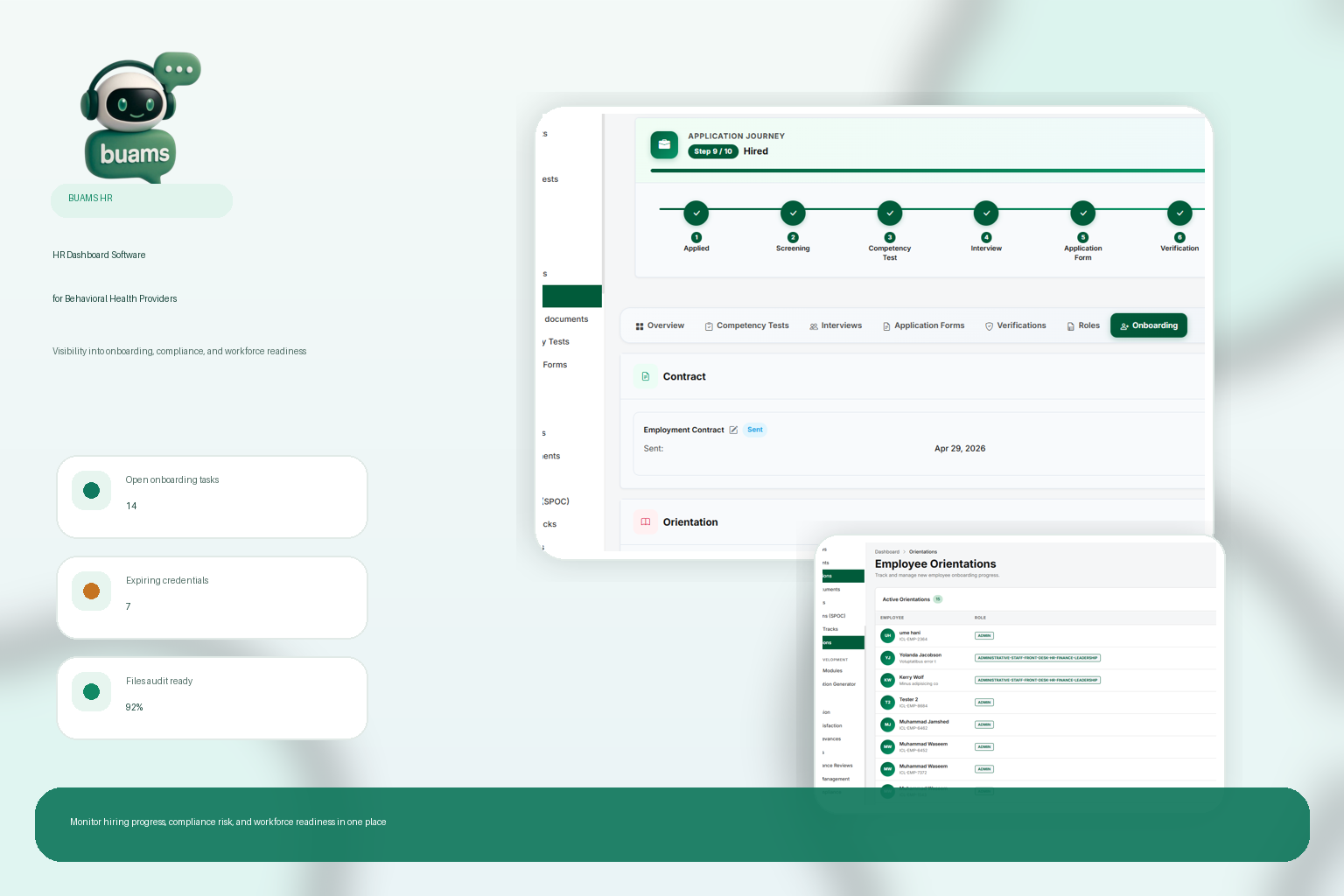
BUAMS HR gives behavioral health organizations a more organized way to manage the people side of compliance. With one system for employee records, onboarding workflows, and workforce documentation, teams can structure training expectations around how staff are actually hired and managed.
That means HR can keep role-based requirements visible, connect supporting documents to the employee file, and monitor deadlines without depending on disconnected trackers. When a team member changes roles or a policy update affects a group of employees, the organization has a clearer starting point for assigning and confirming what needs to happen next.
For providers focused on readiness, BUAMS HR also reduces the scramble that happens when leadership, auditors, or program managers need answers quickly. Instead of rebuilding the story from inboxes and spreadsheets, teams can work from a shared operational record.
Final Thoughts
Training matrix software is valuable because it turns scattered obligations into a manageable system. For behavioral health providers, that structure supports more than compliance. It helps new hires ramp up with confidence, gives supervisors clearer accountability, and makes it easier for HR teams to maintain consistency across programs.
As requirements grow and staffing models become more complex, the real advantage is visibility. When organizations can see who needs what, when it is due, and where proof lives, they are better positioned to protect service quality and reduce avoidable risk.