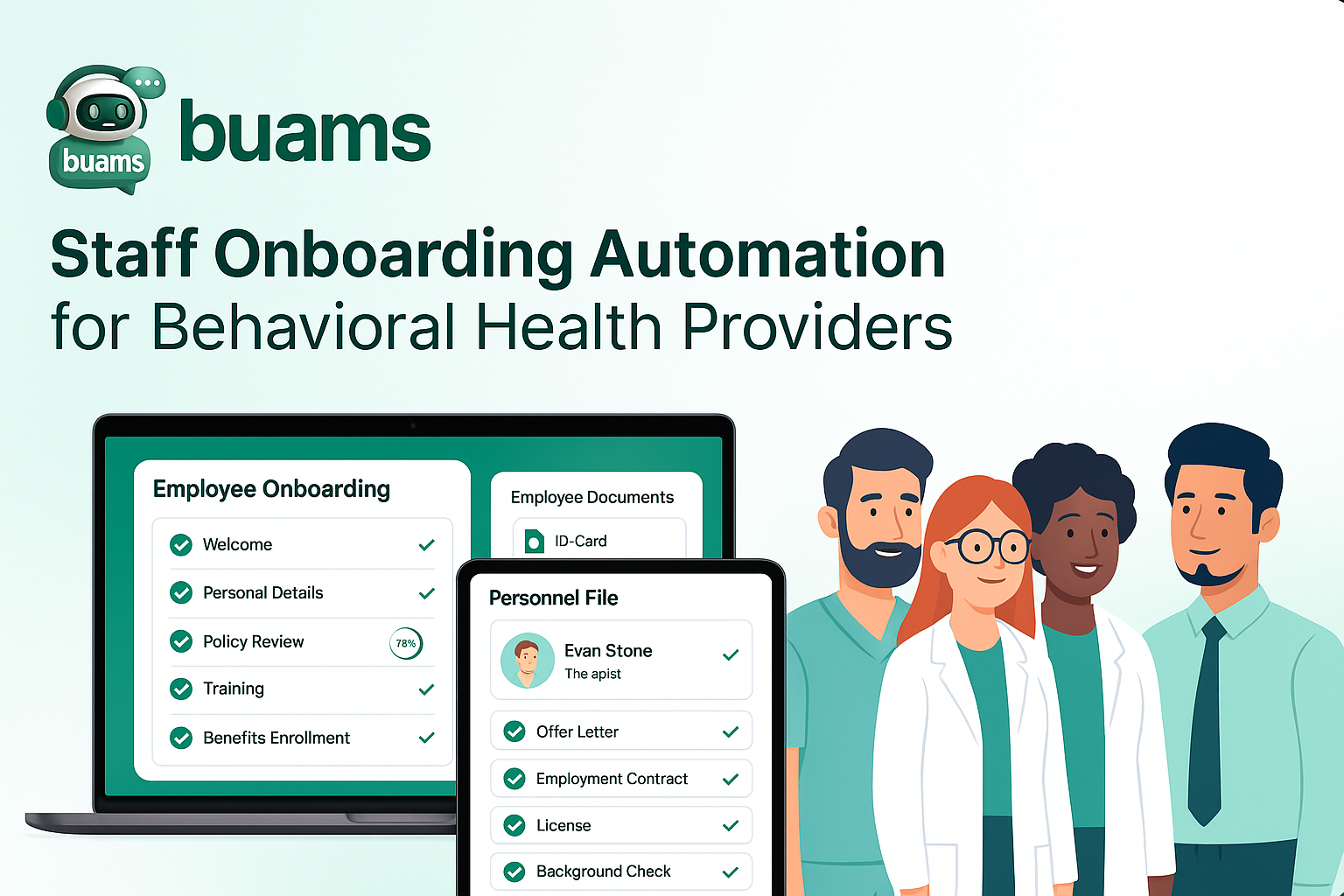
Staff Onboarding Automation for Behavioral Health Providers: How to Cut First-Week Delays and Keep Hiring Packets Complete
Behavioral health organizations often move quickly to fill essential roles, but the first week after an offer is accepted can still become a bottleneck. Missing forms, inconsistent checklists, delayed document collection, and unclear ownership all slow down time to productivity. Staff onboarding automation gives HR teams a more reliable way to move new hires from offer acceptance to readiness without depending on scattered emails and manual follow-up.
For behavioral health providers, this matters even more because onboarding is tied to compliance, supervision readiness, credential verification, and access to sensitive systems. A smoother process helps agencies protect care quality while reducing administrative strain on HR, managers, and clinical leadership.
What Staff Onboarding Automation Means in Behavioral Health
Staff onboarding automation is the use of structured digital workflows to guide each hiring packet, policy acknowledgement, training requirement, and file collection step through completion. Instead of relying on separate spreadsheets, inbox reminders, and paper folders, teams use one system to assign tasks, track progress, and store completed records.
In behavioral health settings, onboarding often involves more than general HR paperwork. Agencies may need role-based policy acknowledgements, background check documentation, license copies, job descriptions, confidentiality forms, orientation records, and supervisor assignments. Automation helps ensure those items are requested in the right order and collected consistently for every hire.
Why First-Week Delays Happen So Often
Many onboarding slowdowns come from process gaps rather than staffing shortages. HR may send documents manually, managers may not know which forms are outstanding, and new hires may receive multiple requests from different people. When no one can see the whole workflow, small delays compound quickly.
Behavioral health providers also face additional complexity when different roles have different requirements. A therapist, direct support professional, and administrative coordinator may each need different forms, training, or credential documentation. Without automation, those variations are easy to miss, especially when hiring volume increases.
Common Problems a Manual Process Creates
What to Look for in Staff Onboarding Automation
Role-based onboarding checklists
Behavioral health organizations need workflows that adapt by position, program, or location. A good system should let HR trigger the right onboarding checklist based on the hire type so each employee receives the correct forms and tasks.
Centralized document collection
New-hire paperwork should be gathered in one secure location with clear visibility into what is complete, pending, or overdue. This helps HR teams avoid chasing missing files across multiple tools.
Task tracking with accountability
Automation works best when each step has an owner. HR, supervisors, and employees should each be able to see their assigned actions and due dates, reducing confusion during the first week.
Status visibility for managers and HR
Leaders should be able to tell, at a glance, whether a new hire is ready for orientation, system access, scheduling, or supervision. Visibility prevents last-minute surprises on the employee's start date.
Connection to compliance records
Onboarding should not end when the forms are signed. The documents and acknowledgements collected during onboarding should flow into the employee file and support future compliance reviews, audits, and renewals.
Best Practices for Building a Stronger Onboarding Workflow
Start by mapping the actual onboarding journey from accepted offer to first-week readiness. Identify which steps are universal, which are role-specific, and where delays usually occur. Then simplify the workflow before automating it. A messy manual process becomes a messy automated process if the logic is never cleaned up.
It also helps to define a small set of operational rules. For example, determine when documents must be completed, which steps block start readiness, who reviews missing items, and where final records are stored. With those decisions made upfront, automation can reinforce consistency instead of adding more complexity.
Finally, review onboarding data regularly. If one document is always late or one step frequently stalls, use that insight to improve the process. Automation is valuable not only because it executes tasks, but because it makes bottlenecks easier to spot.
How BUAMS HR Helps Behavioral Health Teams
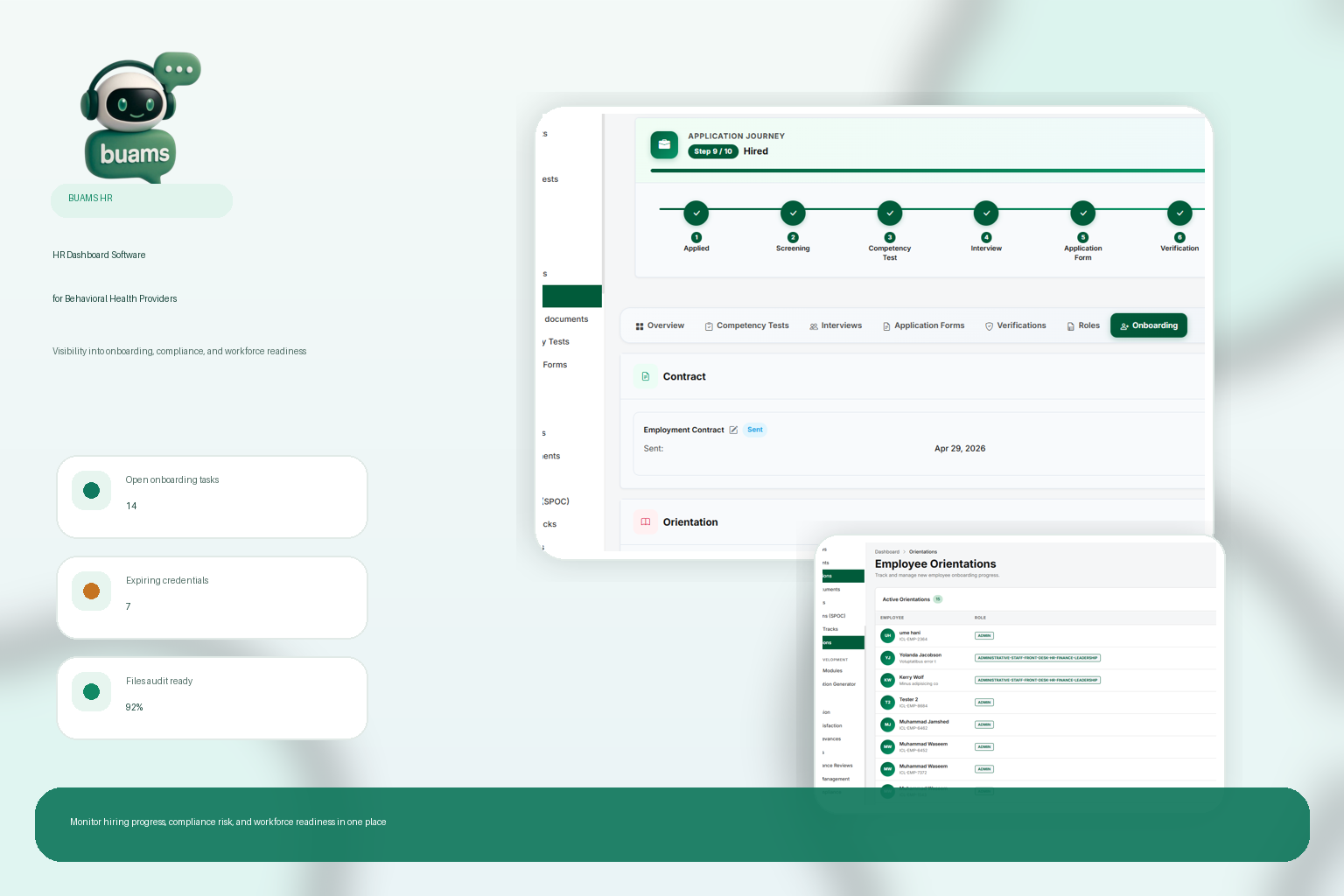
BUAMS HR helps behavioral health providers bring onboarding, employee files, and compliance workflows into one organized system. HR teams can standardize new-hire steps, collect required documentation, and keep records tied to each employee profile instead of scattered across disconnected tools.
For growing agencies, that means fewer first-week delays, less manual follow-up, and clearer oversight into whether each hire has completed required tasks. Because onboarding records live alongside broader HR documentation, teams are better positioned for internal reviews, accreditation preparation, and day-to-day workforce management.
Final Thoughts
Staff onboarding automation is not just about speed. For behavioral health providers, it is a practical way to reduce preventable delays, strengthen file completeness, and support a more consistent employee experience. When HR teams can trust the onboarding process, new hires can begin with the right documents, expectations, and support already in place.
Organizations that automate onboarding thoughtfully are better prepared to scale hiring, protect compliance, and help staff become productive sooner.