Performance reviews can feel especially difficult in behavioral health. Clinical leaders need a fair way to evaluate therapists, case managers, direct care staff, and administrative teams, but they also need to account for licensure, supervision, documentation quality, policy compliance, and changing program needs. When evaluations live in scattered files and reminders depend on manual follow-up, reviews are easy to delay and harder to defend.
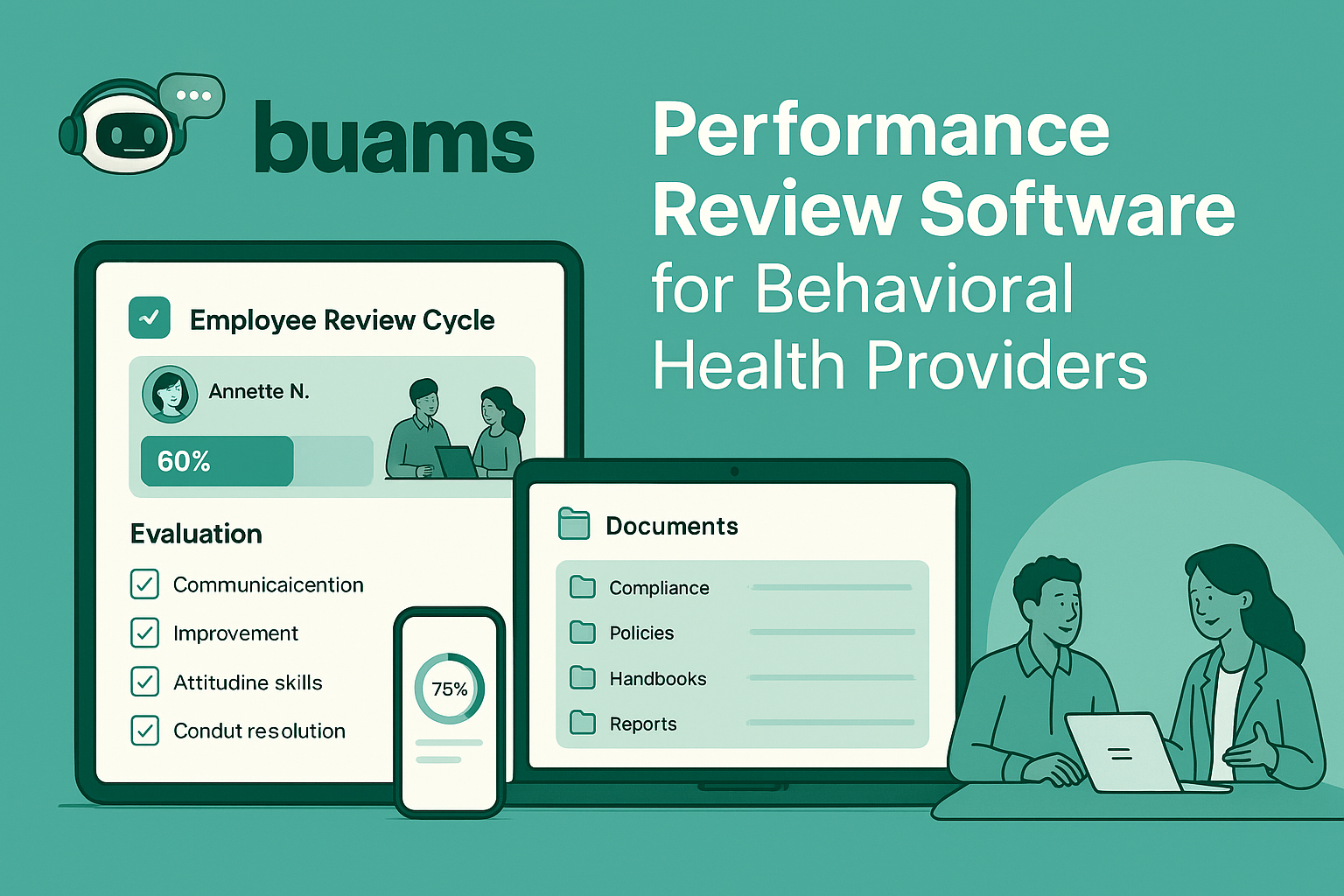
That is why many organizations start looking for performance review software that fits the realities of healthcare operations. A practical system should help HR teams schedule reviews consistently, document expectations clearly, connect evaluations to role requirements, and keep records organized for leadership and compliance needs.
Key Takeaways
What Performance Review Software Should Solve for Behavioral Health Providers
In many behavioral health organizations, performance reviews are still managed with a mix of spreadsheets, shared drives, paper forms, and email reminders. That setup may work for a small team, but it becomes fragile as an agency grows, adds locations, or operates across different service lines. Review cycles start drifting, supervisors use inconsistent forms, and completed evaluations are not always stored where HR can easily retrieve them.
Performance review software should make the process more reliable. It should help HR define review schedules by role or employment stage, give supervisors a clear structure for feedback, and create a dependable record of completed evaluations. For behavioral health providers, it is also valuable when the process can reflect probationary milestones, supervision expectations, training completion, and policy acknowledgment history.
Why Standardized Evaluations Matter in Behavioral Health
Behavioral health employers often manage a wide range of roles with different job expectations. Licensed clinicians may be measured on documentation accuracy, treatment planning discipline, and caseload practices. Residential or community-based staff may be evaluated on punctuality, incident reporting, communication, and safety procedures. Administrative teams may be reviewed on responsiveness, file accuracy, and support for compliance workflows.
A standardized review framework does not mean every role gets the same scorecard. It means the organization uses a repeatable method for setting expectations, documenting feedback, and tracking completion. That consistency helps reduce confusion for supervisors, makes employee development conversations more useful, and creates stronger records when leadership wants to understand workforce trends or address performance issues early.
What to Look for in Performance Review Software
Flexible review workflows by role
Behavioral health agencies rarely have one uniform job profile. Look for software that allows different templates, review intervals, and evaluation criteria based on role, department, or program. This makes it easier to assess clinicians, support staff, and managers in ways that are relevant to their actual responsibilities.
Centralized documentation
Completed reviews should be stored in a consistent, searchable location tied to the employee record. HR should not have to chase attachments in email or search multiple folders to confirm whether a review was completed and signed.
Automated reminders and task visibility
Missed evaluations are often a workflow problem, not a policy problem. Review software should notify supervisors and HR before deadlines pass, show what is overdue, and reduce dependence on manual tracking.
Clear follow-up actions
Reviews should lead somewhere. The best systems support development plans, corrective action follow-up, training assignments, or documented check-ins after a performance conversation. That keeps evaluations from becoming a once-a-year filing exercise.
Support for compliance-aware recordkeeping
In healthcare settings, employee files often need to tell a coherent story. Performance review records should sit alongside onboarding documents, policy acknowledgments, credentials, and other HR materials so the organization has a more complete view of staff readiness and oversight.
Common Review Process Gaps That Create Risk
Agencies do not usually struggle because they lack a review form. They struggle because the surrounding workflow is inconsistent. New supervisors may not know when reviews are due. Managers may complete evaluations but fail to send them back to HR. Staff may receive feedback verbally without a documented summary. Improvement plans may be discussed but not tracked.
These gaps create operational headaches and can also weaken the employee record. If a provider needs to show how expectations were communicated, how concerns were addressed, or whether a review cycle was followed consistently, incomplete documentation makes that harder. A stronger process improves both workforce management and organizational defensibility.
How BUAMS HR Helps Behavioral Health Organizations Manage Reviews
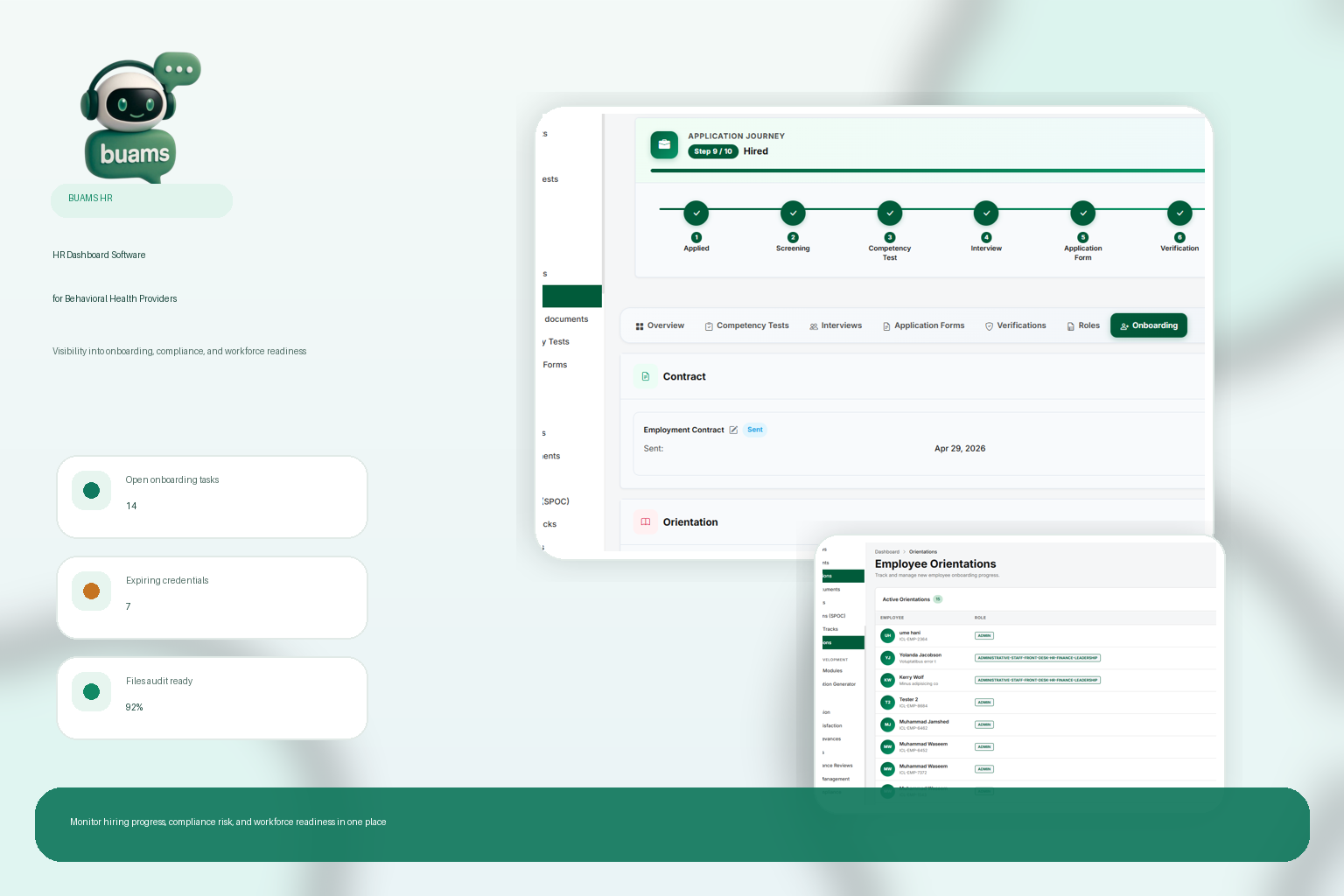
BUAMS HR helps behavioral health providers build a more organized HR workflow by keeping employee records, documentation, and compliance-related materials in one system. Instead of managing evaluation tasks in disconnected tools, HR teams can maintain cleaner employee files and give supervisors a more dependable process for storing and retrieving review records.
For organizations that want to reduce administrative drift, BUAMS HR supports a more structured operating model. When hiring records, employee documents, policy acknowledgments, and related HR workflows are centralized, it becomes easier to maintain visibility into what has been completed, what is missing, and where follow-up is needed. That foundation is especially helpful for providers trying to scale without losing consistency across teams.
Final Thoughts
Performance review software is not just about replacing a paper form. For behavioral health providers, it is a way to create a more dependable process for feedback, accountability, and employee documentation. When reviews are standardized, visible, and tied to the broader employee record, HR teams can support supervisors more effectively and reduce last-minute scrambling around missing evaluations.
As agencies grow, consistency matters. A system that helps structure evaluations, store records properly, and support follow-up can strengthen both staff development and day-to-day HR operations.