Behavioral health organizations often feel pressure to get new hires into orientation, training, and supervised work quickly. The challenge is that speed can expose gaps in hiring packets, license verification, training assignments, policy acknowledgments, and role-based documentation. A strong new hire compliance process helps HR teams move faster without creating avoidable risk.
Key Takeaways
What Is New Hire Compliance Software?
New hire compliance software is a system that helps HR teams manage the documents, tasks, deadlines, and approvals required before an employee is fully cleared for work. In behavioral health settings, that usually includes offer paperwork, background checks, immunization or health records when applicable, job descriptions, policy sign-offs, training assignments, supervision setup, and credential verification tied to the employee's role.
Instead of tracking these steps across email, paper folders, spreadsheets, and separate shared drives, HR can manage them in one structured process. That matters when agencies are hiring across multiple programs, locations, or service lines with different compliance expectations.
Why It Matters in Behavioral Health
Behavioral health providers operate in an environment where staffing delays and compliance gaps both carry real consequences. A clinician, care coordinator, or support staff member may be urgently needed, but rushing someone into service without a complete HR file can create audit issues, supervision problems, or documentation exposure later.
New hire compliance is also harder in this space because requirements are rarely identical across all roles. Licensed staff may need one set of verifications, direct care staff another, and administrative hires a third. If HR does not have a repeatable workflow, each hire becomes a custom project. That increases the chance of missed steps, inconsistent approvals, and last-minute scramble before a start date.
Common Gaps That Slow Down Hiring
Many organizations do not struggle because they lack effort. They struggle because the process is fragmented. A few common friction points show up again and again:
These gaps are expensive because they delay productive work while also weakening compliance discipline. The result is often a slower onboarding experience and a less defensible employee record.
What to Look for in New Hire Compliance Software
Role-Based Onboarding Paths
The best systems let HR build different onboarding workflows for different job types, programs, or locations. That helps agencies assign the right requirements automatically instead of rebuilding checklists for every hire.
Centralized Employee Files
New hire records should not live in scattered inboxes or disconnected folders. A centralized file makes it easier to review missing items, confirm completion status, and respond quickly if leadership or an auditor requests proof.
Task Tracking and Reminder Automation
Manual follow-up drains time. Software should help HR trigger reminders for missing forms, expiring deadlines, and pending approvals so hires keep moving without constant chasing.
Visibility for HR and Managers
Managers need to know whether a new hire is ready for orientation, training, client contact, or independent work. Clear status visibility prevents assumptions that can put programs at risk.
Audit-Ready Documentation
Every onboarding step should leave a usable record. That includes completion dates, approvals, stored documents, and acknowledgment history. When the process is documented well from day one, audits become less disruptive later.
How BUAMS HR Helps
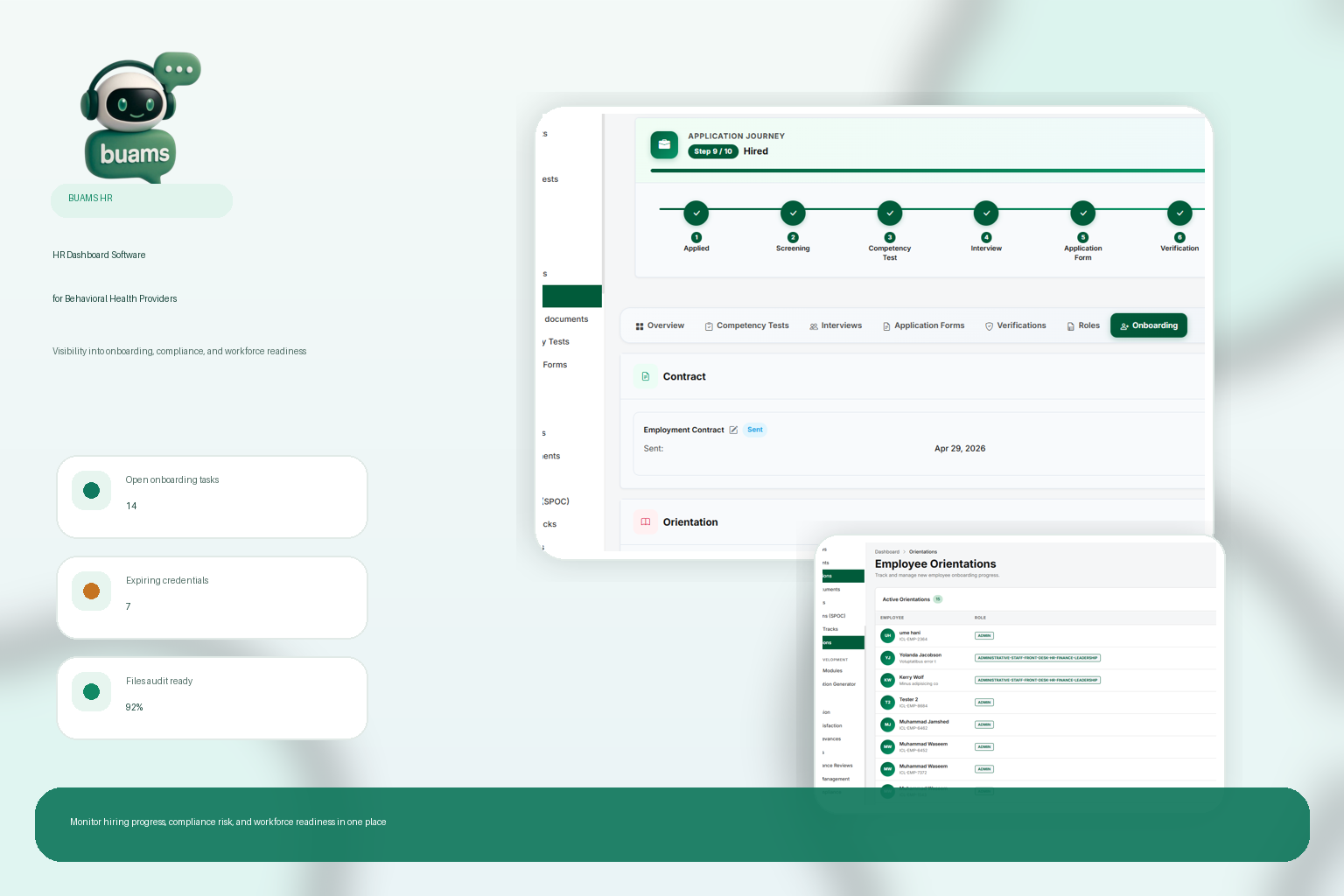
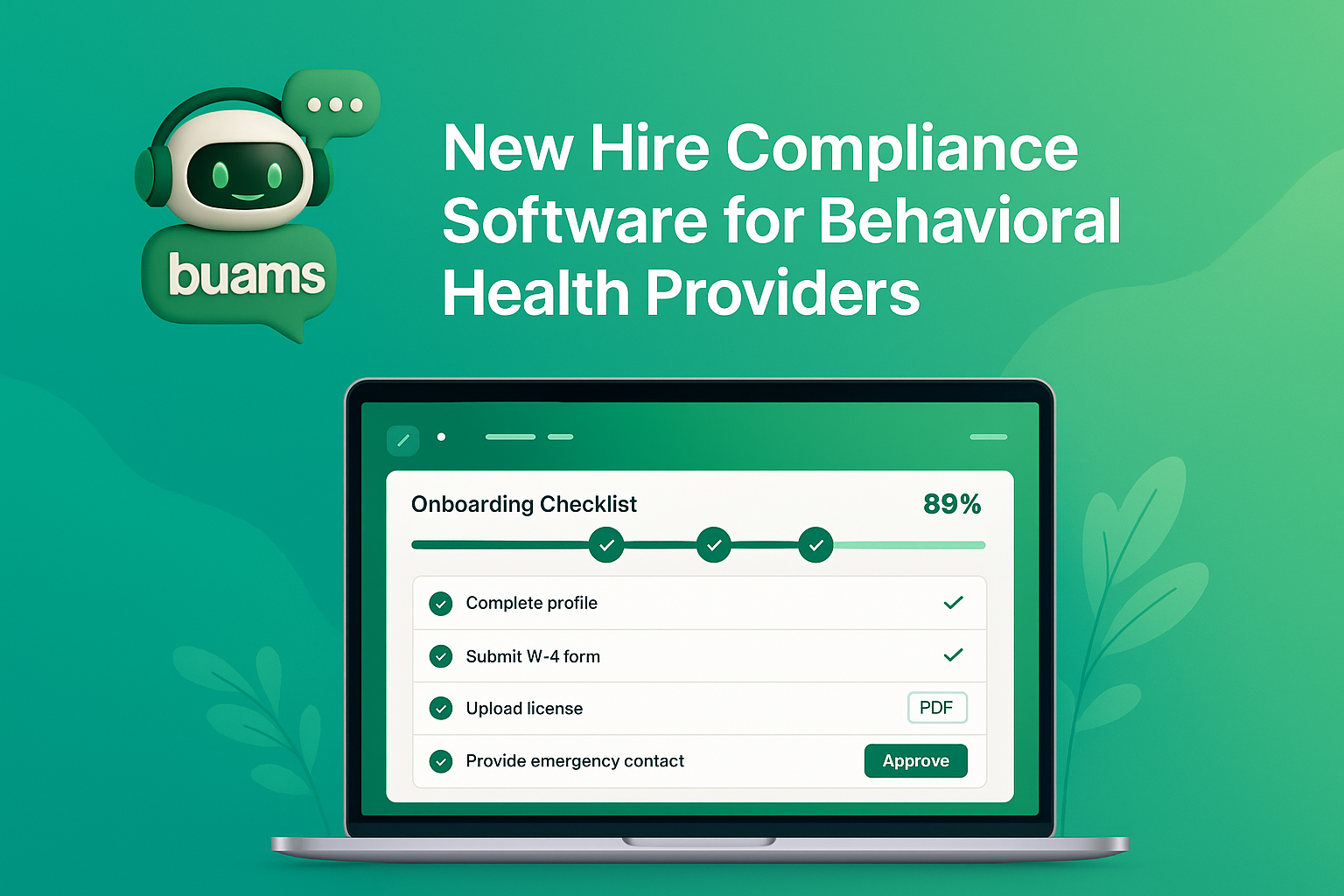
BUAMS HR helps behavioral health organizations standardize the early employee lifecycle by bringing onboarding tasks, required documents, and compliance records into one system. Instead of piecing together spreadsheets and follow-up emails, HR teams can create a more repeatable process that supports both speed and accountability.
For organizations managing multiple staff types, BUAMS HR can support consistent file organization, deadline tracking, and visibility into what is complete versus what is still outstanding. That makes it easier to launch hires efficiently while keeping the underlying record organized for future reviews, renewals, and accreditation preparation.
Final Thoughts
Hiring faster is important, but hiring faster without a dependable compliance process usually creates more work later. New hire compliance software gives behavioral health providers a practical way to reduce onboarding confusion, standardize expectations, and maintain cleaner employee records from the start. For HR teams trying to balance urgency with accountability, that structure can make a meaningful difference.