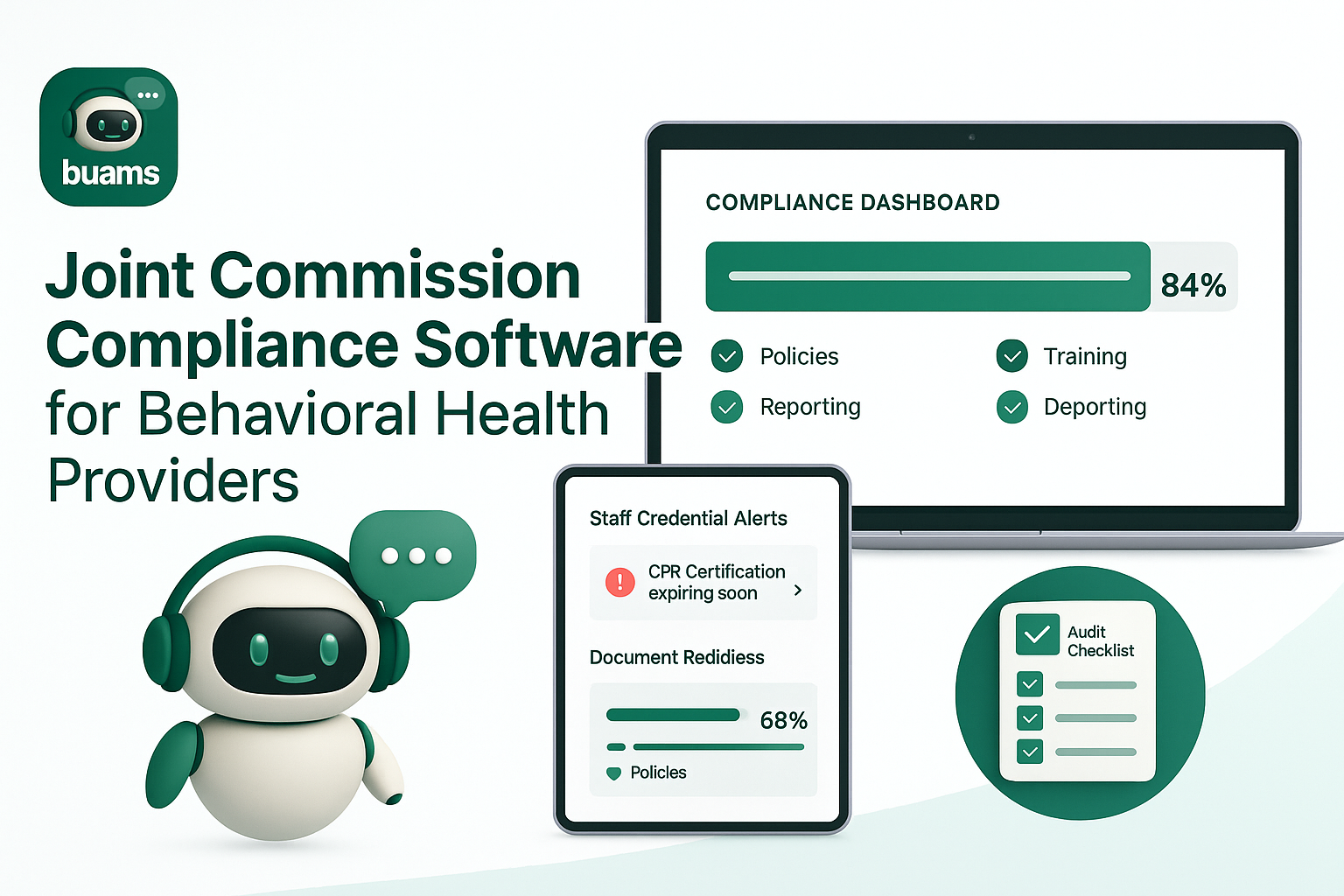
Behavioral health organizations preparing for a Joint Commission survey often discover the same problem too late: HR evidence is scattered across inboxes, shared drives, paper files, and disconnected spreadsheets. A strong compliance process is not just about having the right policies. It is about proving, quickly and clearly, that every employee record, training requirement, credential, and onboarding step is complete and current. That is where Joint Commission compliance software becomes valuable for growing providers.
What Is Joint Commission Compliance Software?
Joint Commission compliance software helps healthcare and behavioral health organizations track the people, documents, and processes that support accreditation readiness. In an HR context, that includes employee onboarding records, licenses and certifications, policy acknowledgements, training completion, supervision documentation, and file completeness.
Instead of relying on manual reminders and fragmented storage, teams can use software to create a dependable system for maintaining evidence year round. That matters because survey readiness is rarely about one missing form. It is usually about the cumulative risk created when HR tasks live in too many places.
Why It Matters for Behavioral Health Providers
Behavioral health agencies operate in an environment where staffing changes, credential renewals, mandatory training, and documentation standards all move at once. HR leaders and operations teams are often balancing recruitment pressure with strict compliance expectations. When that happens, reactive processes become expensive.
Without a structured system, agencies may run into incomplete employee files, overdue license renewals, inconsistent onboarding packets, or difficulty proving that required acknowledgements were collected. During accreditation review, delays in locating documents can create unnecessary stress for HR teams and leadership.
Joint Commission compliance software reduces that pressure by making expectations visible and repeatable. It helps agencies move from emergency preparation to continuous readiness.
What to Look For in Compliance Tracking Software
The best compliance tracking software gives HR and operations teams a simple way to monitor whether core requirements are complete, current, and easy to prove. For behavioral health providers, the following capabilities matter most.
Centralized digital employee files
Every employee record should be easy to locate, review, and update. Digital employee files reduce the risk of missing forms, duplicate storage, and version confusion. They also make internal audits faster.
Credential and license tracking
Behavioral health providers often manage licensed clinicians, supervisors, and support staff with different renewal timelines. A strong platform should track expirations, surface upcoming deadlines, and help teams act before a credential issue becomes a compliance issue.
Structured onboarding workflows
New hire compliance starts on day one. Look for workflows that standardize document collection, policy acknowledgements, job-specific requirements, and completion checks so every employee enters the organization through a consistent process.
Training and acknowledgement visibility
Organizations need a clear record of who completed required training and who acknowledged key policies. This is especially helpful when standards change or when leadership wants to verify readiness across departments.
Audit-friendly reporting
Compliance software should make it easier to answer practical questions quickly. Which files are incomplete? Which credentials expire next month? Which staff members still need a required document? Reporting matters because readiness depends on seeing gaps before an auditor does.
Common Gaps That Create Survey Stress
These gaps are common, especially in organizations that have grown quickly. The good news is that they can be addressed with better structure, consistent ownership, and the right behavioral health HR software.
How BUAMS HR Helps
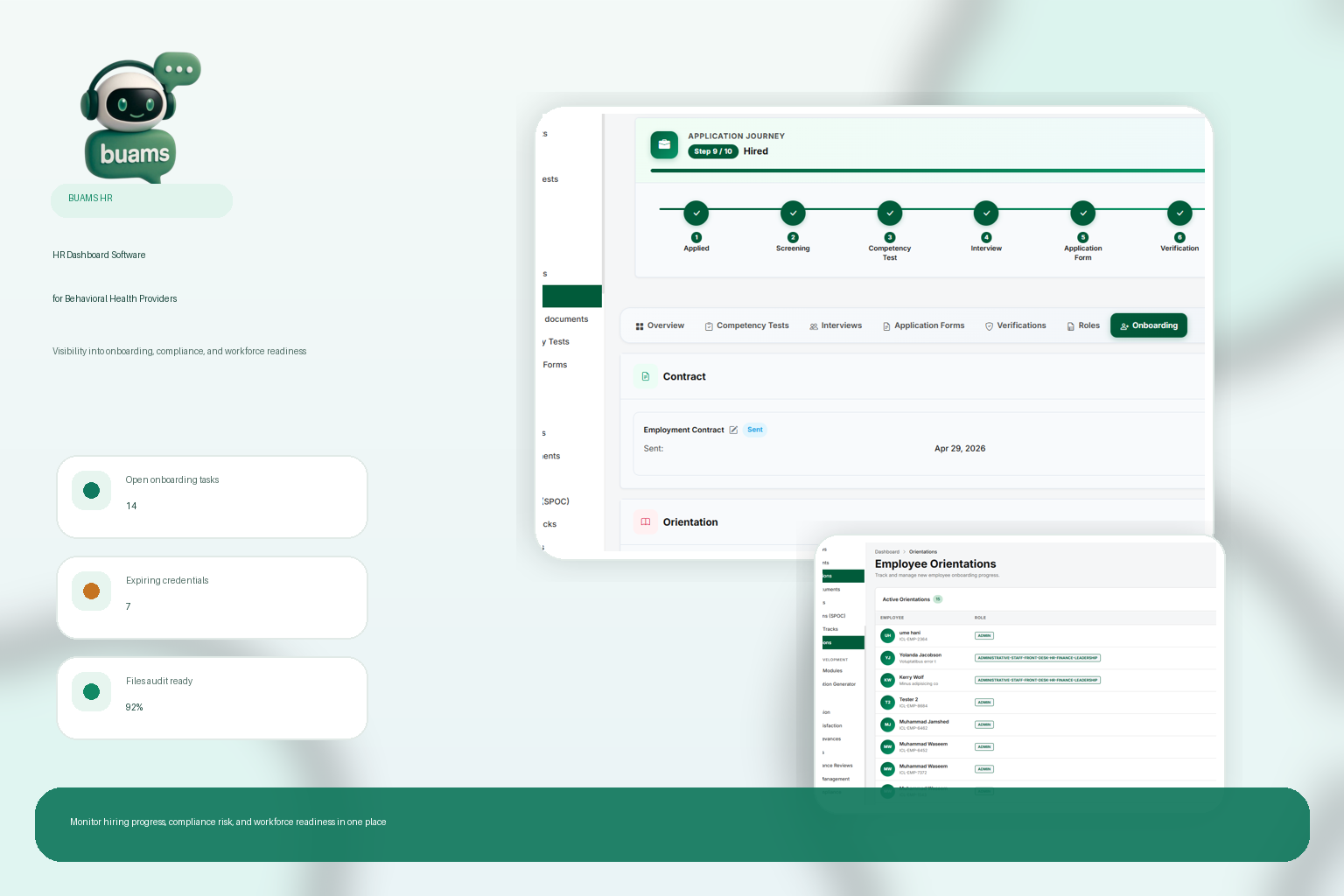
BUAMS HR gives behavioral health providers a practical way to organize HR compliance work inside one system. Teams can maintain digital employee files, standardize onboarding, monitor credentials, and keep essential HR records easier to review. That makes routine oversight simpler and accreditation preparation less disruptive.
For agencies serving Maryland, DC, and similar regulated markets, the value is not just better storage. It is better operational control. When HR teams can quickly identify missing items, upcoming expirations, and incomplete records, they can address risk earlier and spend less time chasing paperwork.
BUAMS HR supports a more consistent compliance process so organizations can focus on workforce stability, service quality, and readiness throughout the year.
Final Thoughts
Joint Commission readiness is easier when HR operations are organized before documents are requested. For behavioral health providers, the right compliance tracking software can turn accreditation prep from a high-stress event into a manageable routine. A system that keeps employee files, credential tracking, and onboarding tasks aligned gives teams more confidence and fewer surprises when review time arrives.
If your organization is still managing HR compliance through disconnected files and manual reminders, now is a good time to build a more reliable process with software designed for behavioral health operations.