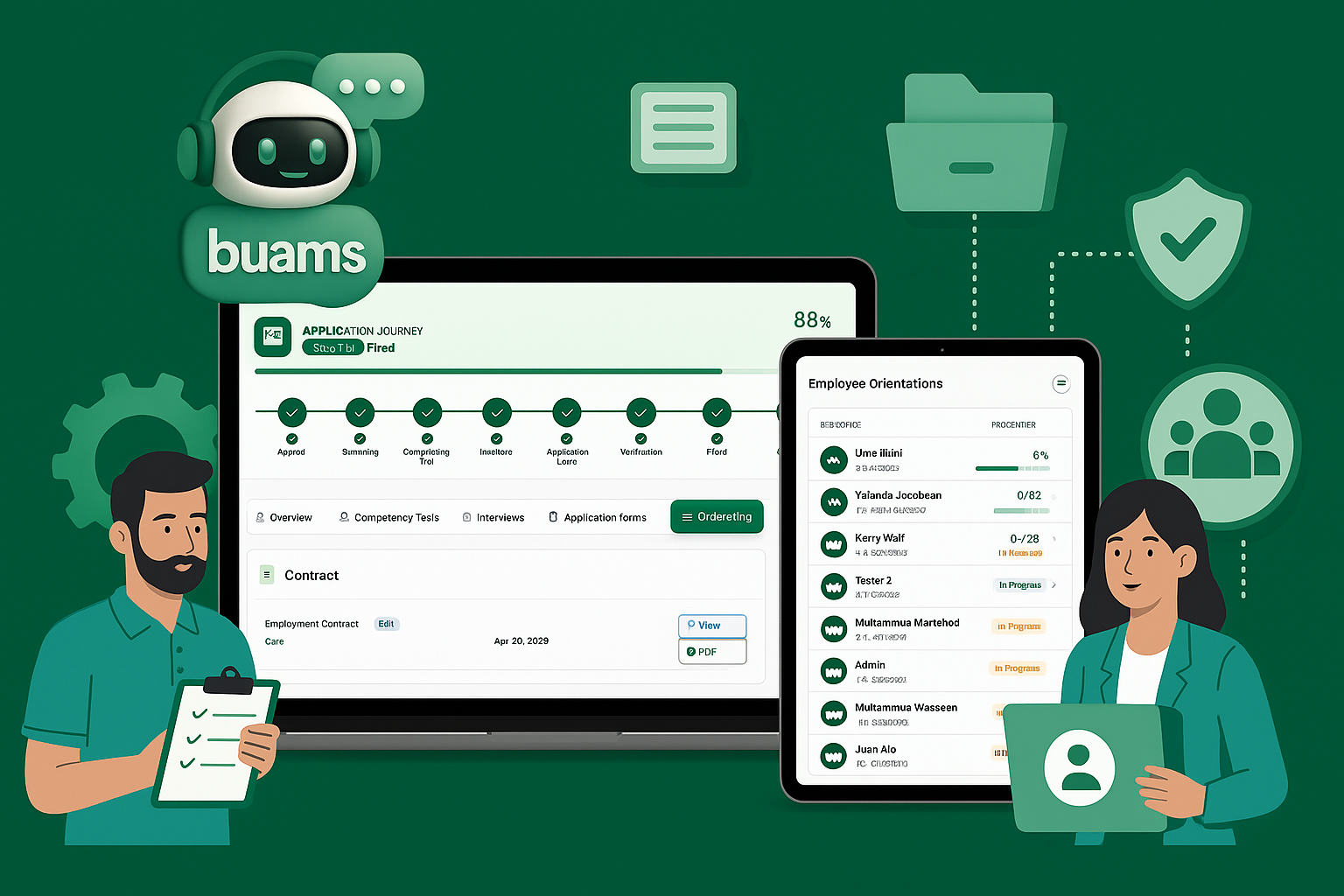
Behavioral health organizations often manage a mix of outpatient programs, community-based services, supervision requirements, credentialing deadlines, and employee file responsibilities across multiple teams. When HR processes live in spreadsheets, inboxes, and separate shared folders, small delays can turn into staffing gaps, audit stress, and inconsistent onboarding. Human services HR software gives leadership and HR teams a more reliable way to organize workforce operations without adding unnecessary complexity.
What Is Human Services HR Software?
Human services HR software is a workforce operations platform designed to support organizations that deliver care, case management, rehabilitation, counseling, or related community services. In behavioral health settings, it goes beyond basic HR recordkeeping. It helps teams manage position-specific onboarding, document collection, credential and training visibility, internal accountability, and day-to-day workforce administration in a structured environment.
Instead of relying on disconnected tools, organizations can use one system to maintain cleaner employee records, assign onboarding tasks, monitor compliance status, and give managers clearer insight into where work stands. That is especially important when agencies operate across multiple locations, service lines, or payer requirements.
Why It Matters for Behavioral Health Organizations
Behavioral health employers face workforce pressure from every direction. Hiring must move quickly, but each role may require specific documentation, background checks, training, or licensure review before the employee is fully cleared. Supervisors need confidence that staff files are complete. HR teams need a practical way to monitor expiring requirements. Executives need better visibility into staffing readiness without chasing updates from multiple departments.
When these processes are inconsistent, agencies risk delayed starts, incomplete files, preventable compliance issues, and extra administrative burden on already busy HR teams. A more structured HR system helps reduce those operational gaps by making responsibilities visible and repeatable.
Common Operational Problems a Centralized HR Platform Can Solve
Inconsistent onboarding across programs
Different departments often follow different onboarding checklists, even when the organization wants one standard. Human services HR software allows HR leaders to define required tasks, documents, and approvals by role or program so the process is more consistent from one hire to the next.
Scattered employee records
When personnel files are split between email threads, shared drives, and paper folders, finding the right document becomes slow and frustrating. A centralized system gives authorized teams one place to store and review required records with stronger organization and accountability.
Poor visibility into workforce readiness
Leaders should not need last-minute manual reports to understand whether onboarding is complete or whether required items are expiring. A stronger HR platform helps surface incomplete tasks, overdue steps, and upcoming issues before they disrupt operations.
Manual follow-up that drains HR capacity
HR teams spend too much time reminding staff and managers about documents, forms, and deadlines. Automation and clearer workflows reduce repetitive follow-up so teams can focus on higher-value work like recruiting support, retention, and workforce planning.
What to Look for in Human Services HR Software
Not every HR system fits the realities of behavioral health and human services. The most useful platforms are built to support compliance-aware workforce workflows, not just generic employee data storage.
Best Practices for Implementation
Software alone does not fix a fragmented process. Organizations get better results when they first define a small set of standard workforce workflows and then configure the system around those priorities.
How BUAMS HR Helps
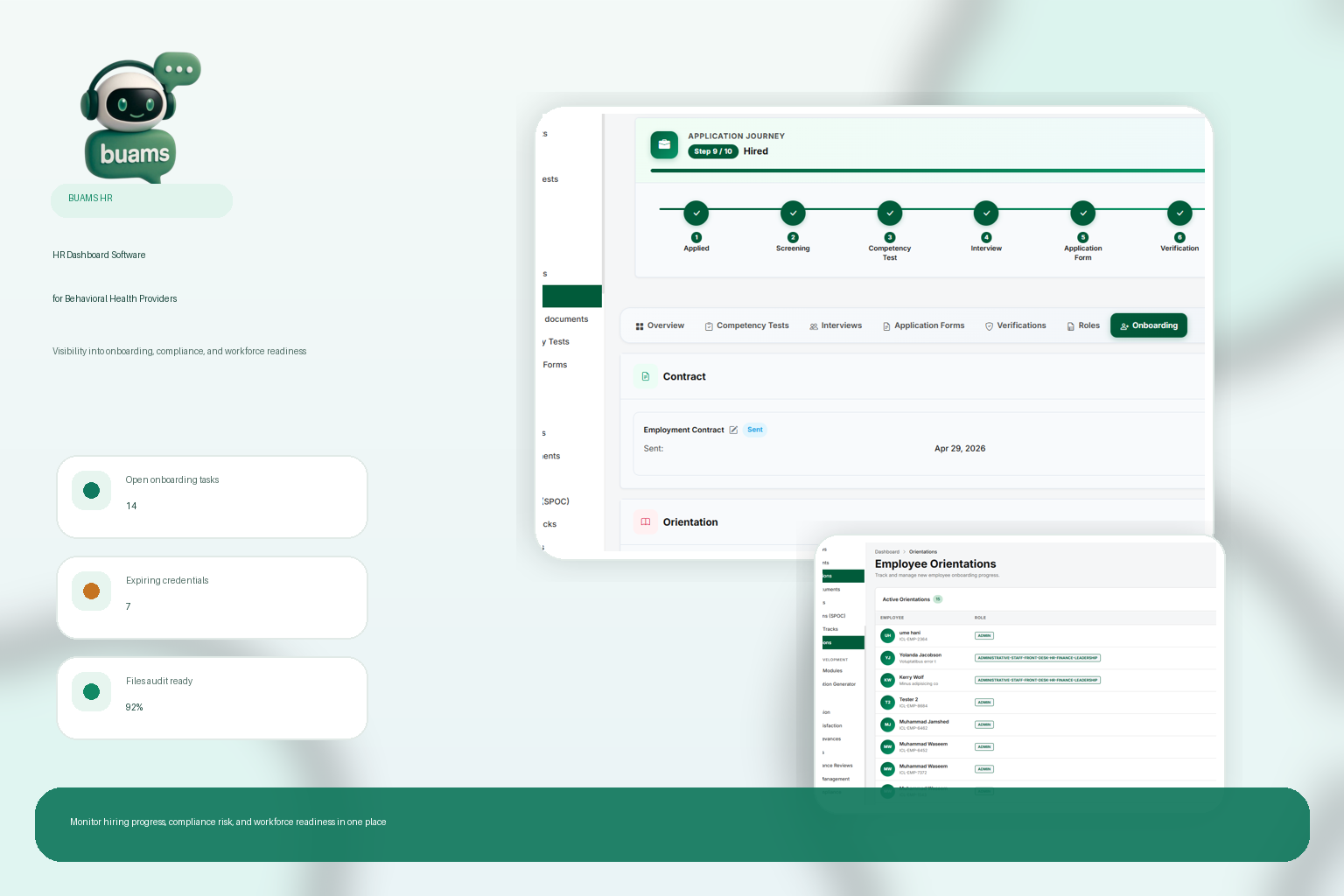
BUAMS HR is designed for behavioral health and related human services organizations that need a more organized way to manage employee operations. With BUAMS HR, teams can support structured onboarding, maintain digital employee records, track compliance-related requirements, and improve visibility across the workforce from one system.
For agencies balancing multiple programs and growing administrative complexity, BUAMS HR helps reduce fragmentation. Instead of piecing together status updates from spreadsheets and folders, teams can work from a centralized platform built around practical HR workflows for care-focused organizations.
Final Thoughts
Human services HR software is not just about replacing paper or moving forms online. For behavioral health organizations, it is a way to create more consistent workforce operations, reduce preventable delays, and support readiness across hiring, documentation, and compliance. The agencies that benefit most are often the ones that need better coordination, better visibility, and fewer manual workarounds as they grow.
With the right system in place, HR teams can spend less time chasing paperwork and more time supporting a stable, prepared workforce.