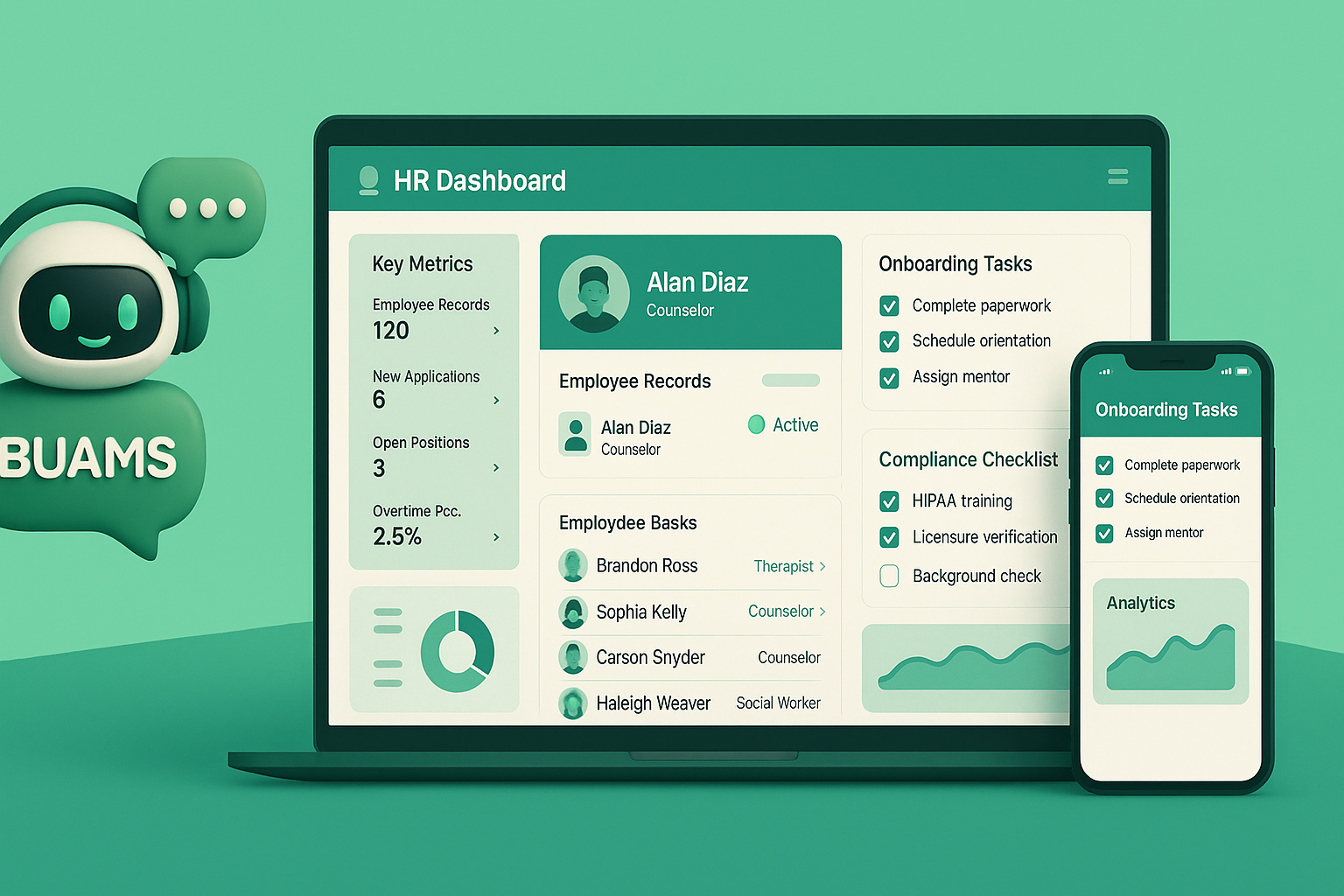
Behavioral health practices rarely struggle because their teams do not care about people. They struggle because hiring tasks, employee records, credential reminders, and compliance follow-up often live in too many places at once. When HR work is spread across inboxes, paper files, shared drives, and spreadsheets, delays become normal and small misses become larger operational risks.
HR management software gives growing behavioral health organizations a more reliable way to manage employee information, onboarding tasks, compliance documents, and recurring workforce processes in one system. For leaders trying to scale without losing control of HR operations, that centralization matters.
Key Takeaways
What HR management software should solve for behavioral health practices
Behavioral health organizations operate in an environment where staffing, documentation, and compliance are tightly connected. A delayed background check can affect start dates. A missing training acknowledgment can create audit stress. An outdated employee file can slow down accreditation preparation or leadership review.
Good HR management software should help teams manage the full operational picture, not just store names and job titles. That means supporting hiring and onboarding workflows, digital employee files, policy acknowledgments, credential visibility, reporting, and repeatable follow-up.
Why fragmented HR processes become expensive as you grow
Small organizations can sometimes get by with manual workarounds for a while. Growth changes that fast. Once a practice adds more clinicians, supervisors, locations, or service lines, scattered HR processes create bottlenecks that are hard to see until they start affecting care operations.
Common pain points include duplicate data entry, inconsistent onboarding steps, unclear ownership of expiring requirements, and delays when leaders need documentation quickly. Even when each issue seems minor on its own, the combined administrative drag can slow hiring, frustrate managers, and increase compliance exposure.
What to look for in HR management software
Not every HR platform is designed for the realities of behavioral health. The best fit usually combines ease of use with practical controls that support documentation discipline and ongoing accountability.
How standardized workflows improve consistency
One of the biggest advantages of HR management software is consistency. Instead of relying on memory or individual manager habits, organizations can define a standard process for every hire, transfer, review, or document request. That makes outcomes less dependent on who happens to be available that day.
For behavioral health teams, consistency supports both operations and compliance. New employees can move through the same onboarding path, required records can be collected in the same order, and HR leaders can see where items are stalled without chasing updates across multiple systems.
How BUAMS HR helps behavioral health organizations stay organized
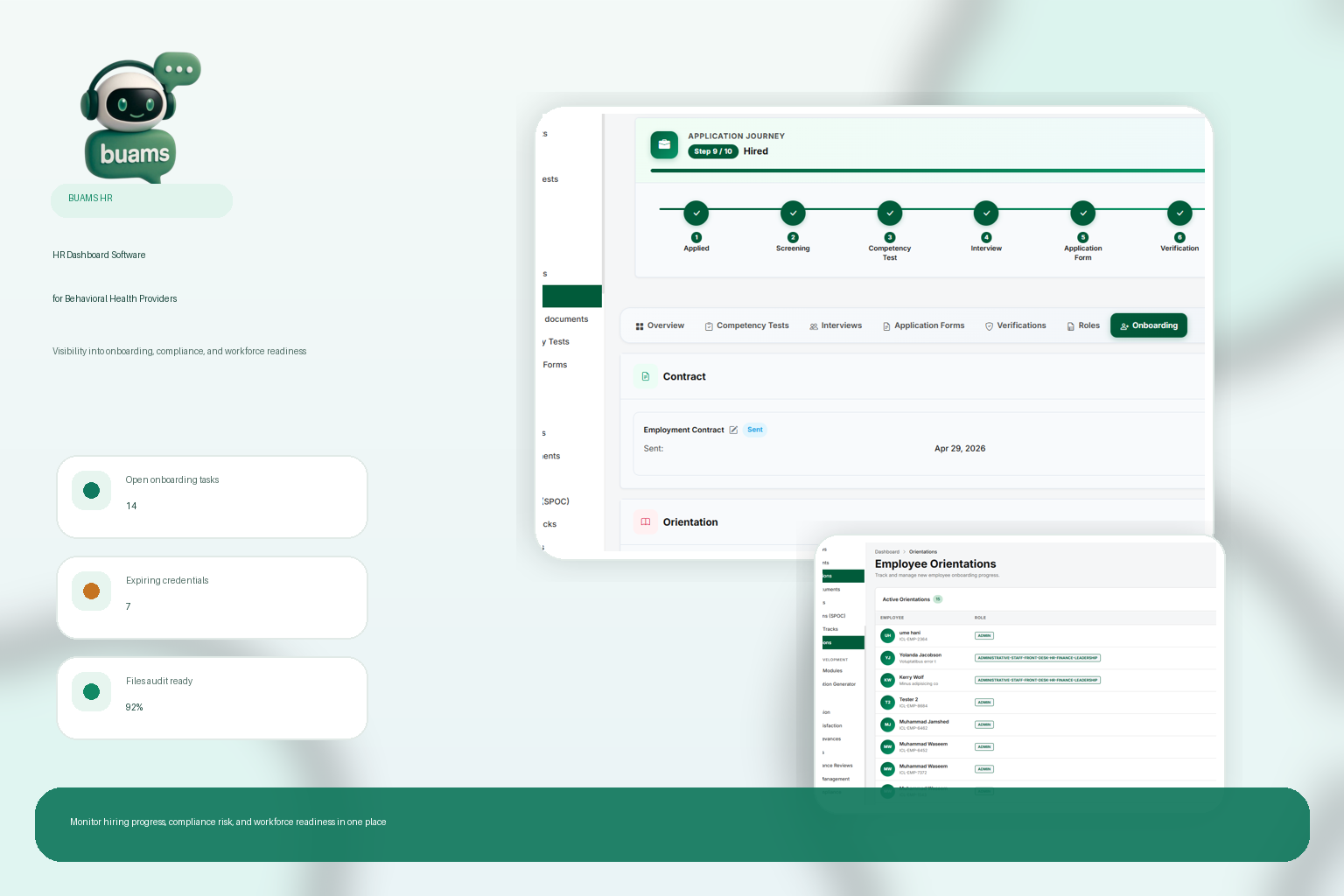
BUAMS HR is built for mental and behavioral health organizations that need a cleaner way to manage workforce administration. Instead of juggling disconnected spreadsheets, folders, and reminders, teams can centralize employee files, organize onboarding steps, track required documentation, and maintain a more audit-ready HR process.
That matters for growing practices that need better operational control without adding unnecessary complexity. A system like BUAMS HR can help leaders reduce manual follow-up, improve visibility across programs, and create a more dependable HR foundation as the organization expands.
Final thoughts
For behavioral health practices, HR management software is not just about convenience. It is a practical tool for reducing delays, improving documentation quality, and supporting responsible growth. When employee records, onboarding tasks, and compliance workflows are managed in one place, HR teams can spend less time chasing information and more time keeping the workforce prepared.
If your organization is still relying on disconnected tools to run core HR processes, this is usually the point where centralization starts paying for itself.