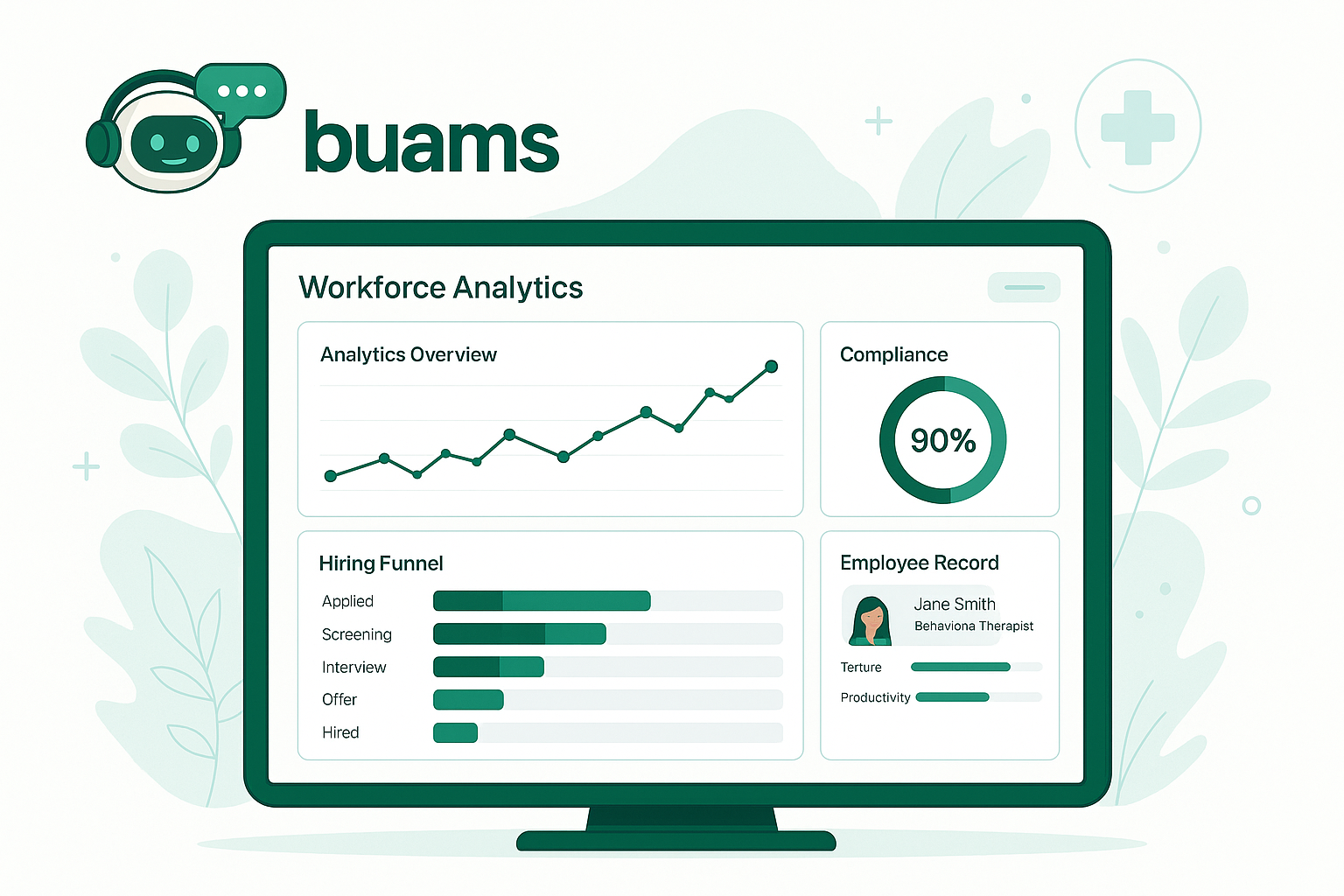
Behavioral health organizations make workforce decisions every day that affect hiring speed, compliance readiness, supervision coverage, and staff retention. The problem is that many HR teams still pull information from spreadsheets, email threads, paper checklists, and disconnected systems before they can answer basic operational questions. That delay makes it harder to respond to risk quickly.
HR analytics software gives behavioral health providers a clearer way to monitor workforce trends, spot bottlenecks, and make decisions with current information instead of guesswork. For agencies managing credentialed staff, expiring documents, onboarding deadlines, and multi-program teams, better visibility can reduce administrative strain while supporting more consistent compliance.
Key Takeaways
What Is HR Analytics Software?
HR analytics software is a system that helps organizations collect, organize, and interpret workforce data so leaders can make better staffing and HR decisions. Instead of relying on manual reports, HR teams can view patterns across applications, onboarding tasks, credential renewals, training completion, document status, and employee records.
In behavioral health settings, analytics matter because workforce operations are closely tied to care continuity and compliance. When leaders can see where hiring slows down, which requirements are at risk of expiring, or which teams have unusually high turnover, they can act earlier and with more confidence.
Why HR Analytics Matters for Behavioral Health Providers
Behavioral health organizations often operate across multiple programs, locations, and role types. Recruiters, HR managers, supervisors, and compliance staff may all need visibility into the same employee lifecycle, but they often view different pieces of the process. Without strong reporting, important trends stay hidden until they become urgent.
HR analytics software helps bring those signals together. Agencies can review time-to-hire, onboarding completion rates, pending documents, certification timelines, and staffing changes without building every report manually. That visibility supports both strategic planning and daily operations.
It also improves communication. When HR and operations teams work from the same data, it becomes easier to align around priorities, explain delays, and focus follow-up where it matters most.
What Behavioral Health HR Teams Should Track
The most useful analytics are not just interesting charts. They should help teams answer practical questions and decide what to do next. For behavioral health providers, a strong reporting setup often includes the following areas.
Hiring Pipeline Visibility
Track how long it takes candidates to move from application to offer, where approvals slow down, and which roles remain open the longest. This helps teams reduce delays that can affect program coverage and service capacity.
Onboarding Completion Rates
Measure which new hires have completed forms, policy acknowledgments, trainings, and required documentation. Incomplete onboarding can create risk, especially when agencies need staff to become productive quickly.
Credential and Training Deadlines
Monitor upcoming license, certification, and training expirations by role, supervisor, or program. Clear dashboards help teams prioritize follow-up before missed deadlines affect scheduling or compliance reviews.
Employee File Health
Review missing documents, outdated records, and unresolved tasks across employee files. This is especially valuable when organizations need to respond to auditors, accreditors, or internal leadership questions on short notice.
Retention and Turnover Trends
Look for patterns by location, job type, or tenure. HR analytics software can help agencies see whether attrition is clustered around certain teams, hiring periods, or operational issues that require attention.
Best Practices for Using HR Analytics Software Well
Reporting is only useful when the underlying process is structured. Behavioral health providers usually get the best results when they build analytics into everyday workflows instead of treating reporting as a separate project.
Common Gaps Analytics Can Reveal
Many organizations know they have delays or compliance pressure, but they cannot always see exactly where those issues begin. HR analytics software can surface patterns that would otherwise stay buried in manual work.
For example, teams may discover that onboarding slows down when document collection starts too late, or that certain programs face repeated credential renewal bottlenecks because reminder workflows are inconsistent. They may also find that file quality varies widely by location, which creates uneven audit readiness across the organization.
Once these patterns are visible, leaders can improve process design instead of relying on repeated one-off follow-up.
How BUAMS HR Helps
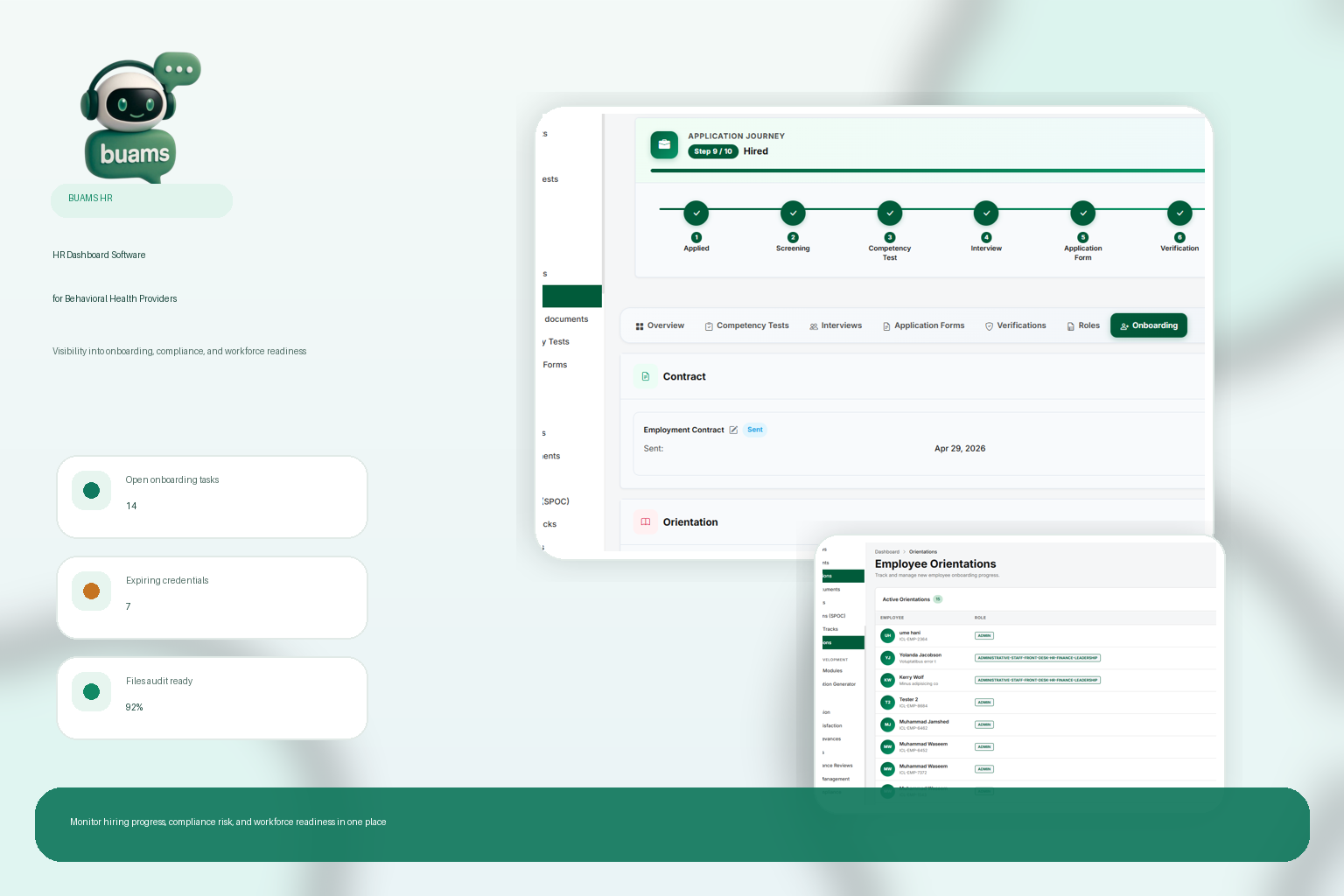
BUAMS HR helps behavioral health providers centralize the workforce data that supports stronger reporting and better decisions. When hiring activity, onboarding tasks, employee files, and compliance requirements live in one system, teams can monitor progress more clearly and reduce time spent piecing together updates manually.
With BUAMS HR, organizations can support cleaner employee records, track completion across key HR workflows, and improve visibility into deadlines that affect staffing readiness. That makes it easier for HR leaders and program managers to focus on exceptions, reduce last-minute scrambles, and maintain a more reliable operating rhythm.
Instead of treating analytics as a separate exercise, BUAMS HR helps turn daily workforce activity into practical insight that supports growth, accountability, and compliance-aware operations.
Final Thoughts
Behavioral health providers do not need more reports for the sake of reporting. They need faster visibility into the workforce issues that affect hiring, compliance, and team stability. HR analytics software can provide that visibility when it is built on structured workflows and current employee data.
For organizations trying to reduce manual follow-up and make better workforce decisions, the right analytics approach can turn scattered HR information into something operationally useful. That is where a connected platform like BUAMS HR can make a meaningful difference.