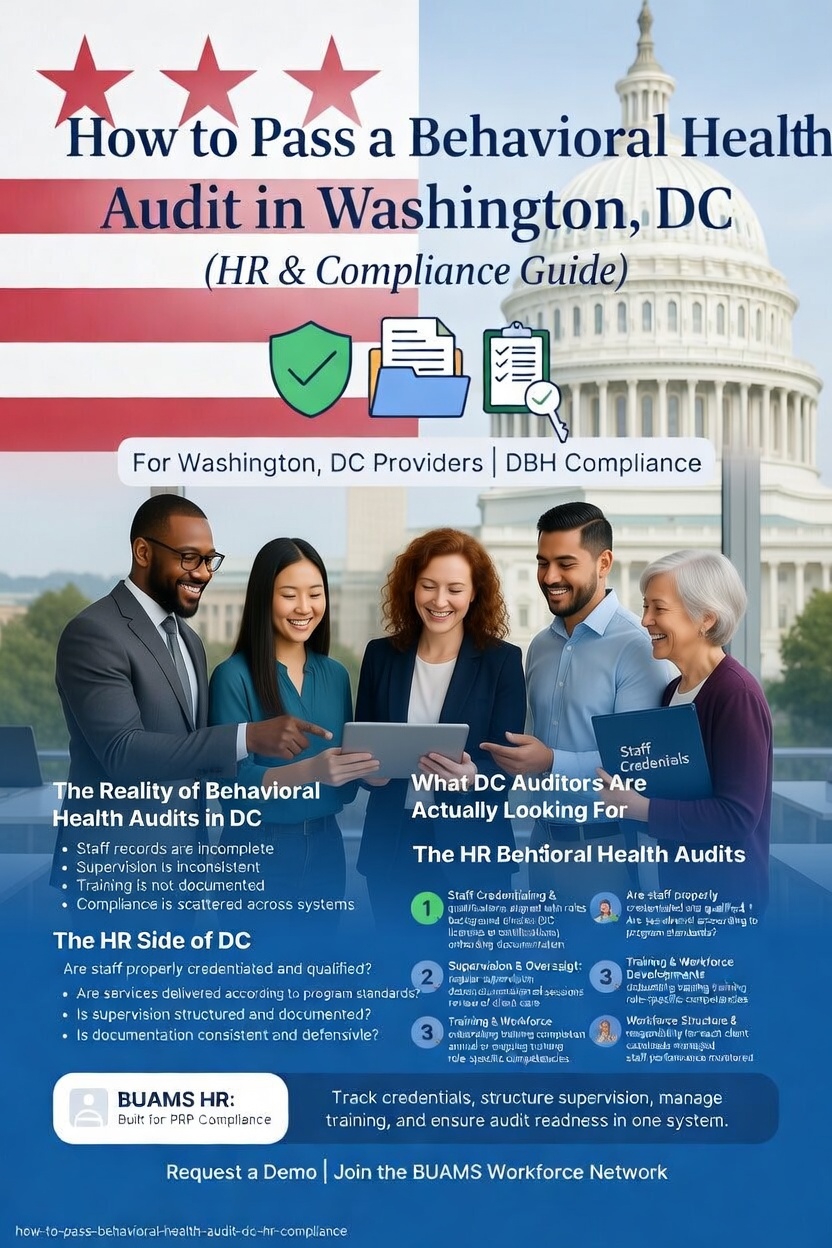
The Reality of Behavioral Health Audits in DC
If you operate in Washington, DC, you already know the pressure.
Audits from the Department of Behavioral Health (DBH) are detailed, structured, and increasingly focused on accountability.
And just like Maryland, most organizations don’t struggle because of poor care.
They struggle because:
- staff records are incomplete
- supervision is inconsistent
- training is not documented
- compliance is scattered across systems
In DC, audits are not just clinical—they are operational and workforce-driven.
What DC Auditors Are Actually Looking For
When DBH or oversight bodies review your program, they are evaluating:
- Are staff properly credentialed and qualified?
- Are services delivered according to program standards?
- Is supervision structured and documented?
- Is documentation consistent and defensible?
At the core, they are asking:
Is this organization in control of its workforce and services?
The HR Side of DC Behavioral Health Audits
This is where most programs underestimate risk.
1. Staff Credentialing & Compliance
You must be able to clearly show:
- qualifications aligned with roles
- background checks (DC requirements)
- licenses or certifications (if applicable)
- onboarding documentation
Common audit issues in DC:
- incomplete personnel files
- expired or missing credentials
- inconsistent onboarding documentation
2. Supervision & Oversight
Supervision is a major focus area in DC.
Programs must demonstrate:
- regular supervision (individual and/or group)
- documentation of sessions
- review of client care and staff performance
Where programs fail:
Supervision happens informally—but is not documented in a structured way.
3. Training & Workforce Development
DC places strong emphasis on:
- staff training
- competency development
- ongoing education
You should be able to show:
- onboarding training completion
- annual or ongoing training
- role-specific competencies
Red flag:
No clear system for tracking training.
4. Workforce Structure & Accountability
Auditors want clarity:
- Who is responsible for each client?
- How are caseloads managed?
- How is staff performance monitored?
If this is unclear, it signals weak internal controls.
Documentation Still Matters (But It Must Align)
Your documentation must include:
- assessments
- individualized plans
- progress notes
- service summaries
But in DC, alignment is everything.
Auditors look for:
- consistency across documents
- clear connection between goals and services
- evidence of actual service delivery
A Simple Framework to Pass a DC Audit
You can simplify audit readiness into four areas:
1. Workforce Compliance
- staff files complete
- credentials current
- onboarding documented
2. Supervision
- regular and structured
- documented consistently
- tied to performance
3. Training
- onboarding completed
- ongoing training tracked
- competency documented
4. Documentation
- aligned and individualized
- completed on time
- reflective of real services
If these four areas are strong, your audit risk drops significantly.
Why Many DC Programs Still Struggle
Even well-run organizations run into issues because they rely on:
- manual tracking systems
- spreadsheets for credentials
- separate tools for HR and clinical work
This leads to:
- missed compliance deadlines
- inconsistent supervision
- gaps in documentation
- last-minute audit preparation
The issue is rarely effort—it’s lack of system structure.
How BUAMS HR Supports DC Providers
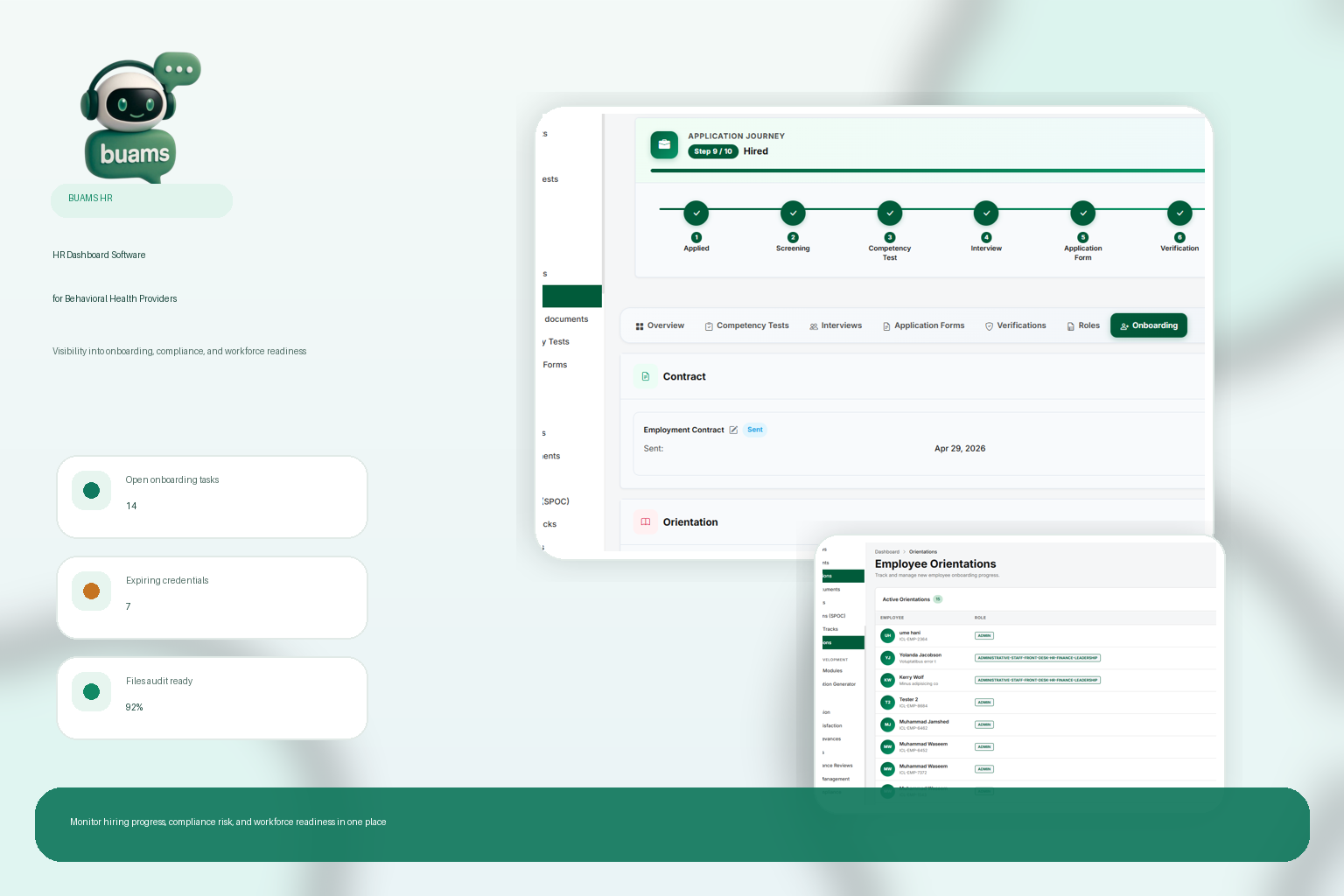
BUAMS HR was built for exactly this environment—where compliance and workforce management must work together.
From an HR perspective, it helps DC providers:
1. Centralize Staff Records
- credentials, background checks, onboarding
- real-time visibility across your workforce
2. Track Credential Expirations
- automated alerts
- reduced compliance risk
3. Structure Supervision
- document individual and group sessions
- maintain audit-ready logs
4. Manage Training
- assign onboarding and ongoing training
- track completion and competency
5. Improve Workforce Oversight
- monitor caseloads
- track staff activity
- ensure accountability
6. Stay Audit-Ready
Everything is organized in one place—so when auditors ask, you’re ready.
What an Audit-Ready DC Program Looks Like
An audit-ready organization can:
- produce staff files immediately
- show supervision history without delays
- verify credentials instantly
- demonstrate consistent documentation across clients
No scrambling. No missing pieces.
Final Thoughts
Passing a behavioral health audit in DC is not about doing more work.
It’s about having the right structure in place.
When your workforce systems are aligned:
- compliance becomes manageable
- audits become predictable
- your organization becomes scalable
Call to Action
If you want to move from reactive audit preparation to full audit readiness:
Request a demo of BUAMS HR and see how you can manage workforce compliance, supervision, and training in one platform. (www.buamshr.com)
Or, if you’re hiring:
Join the BUAMS workforce network to connect with qualified behavioral health professionals in Washington, DC and Maryland. (www.buamshr.com)