Employee Self Service Software for Behavioral Health Providers: How to Reduce HR Ticket Volume Without Sacrificing Compliance
Behavioral health organizations often ask HR teams to do too much through email, paper forms, and one-off follow-up. Staff need pay stubs, handbook acknowledgments, updated tax forms, license reminders, address changes, and onboarding documents, while managers need confidence that the right tasks were completed on time. When every request routes through HR manually, delays pile up and compliance risk grows.
Employee self service software gives staff a secure place to complete routine actions on their own while keeping HR in control of approvals, records, and audit evidence. For behavioral health providers, the value is not just convenience. It is a practical way to keep employee data current, reduce administrative noise, and support workforce readiness across clinics, programs, and locations.
Key Takeaways
What Employee Self Service Software Means in a Behavioral Health Setting
In many healthcare organizations, employee self service software is treated like a convenience feature. In behavioral health, it is more useful when it is designed as an operational control point. Staff members should be able to complete routine updates and required acknowledgments without sending repeated emails, while HR should still be able to review submissions, monitor deadlines, and keep a clear record of what changed.
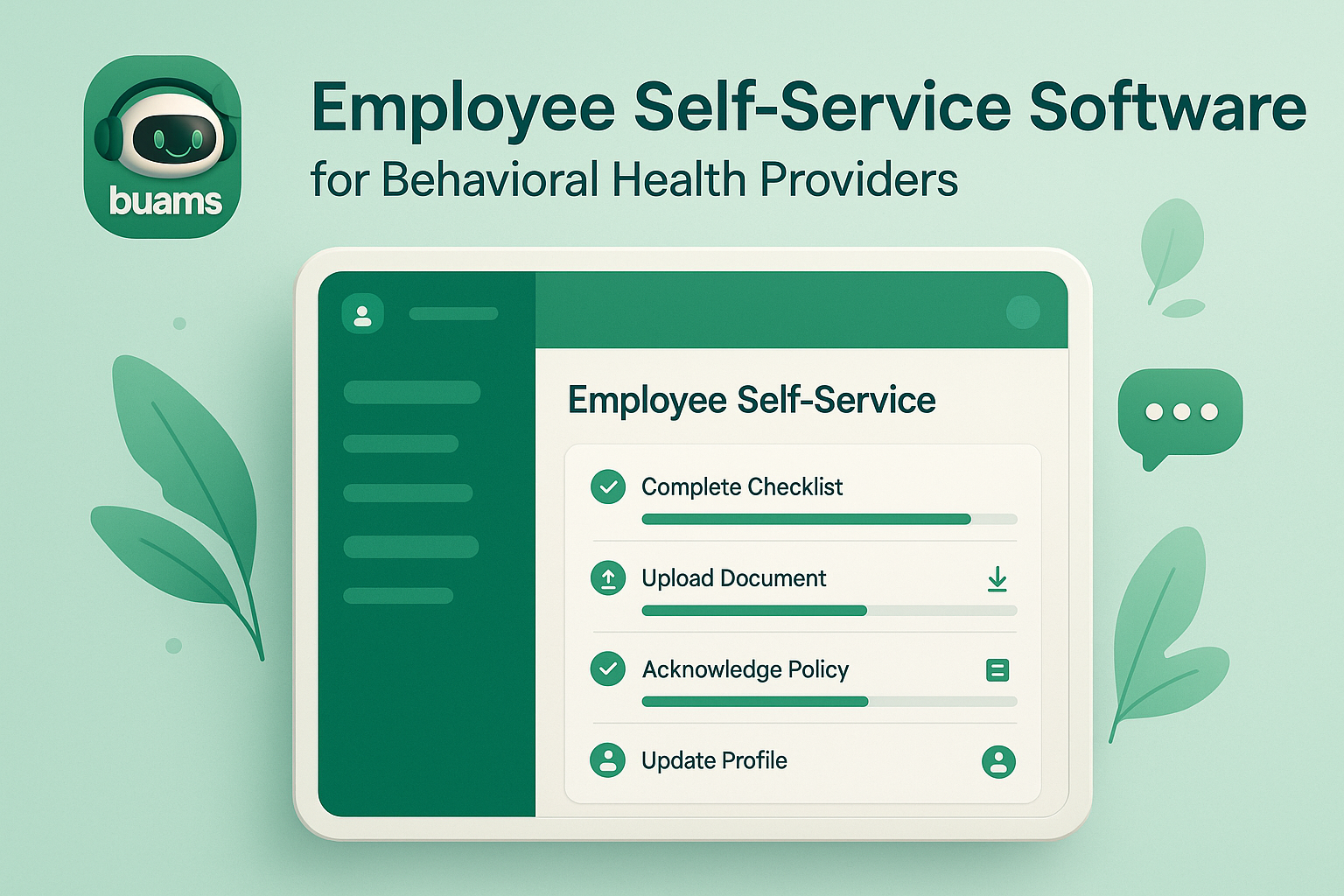
Common self service tasks for behavioral health teams include completing onboarding packets, uploading requested documents, reviewing policies, updating contact details, confirming training completion, and checking which items still need attention. When these actions are centralized, organizations spend less time hunting for forms and more time supporting hiring, retention, and compliance.
Why HR Ticket Volume Becomes a Problem
Manual HR support creates hidden costs. Staff wait longer for answers, HR specialists spend more time on low-value follow-up, and supervisors lack visibility into stalled tasks. In fast-moving behavioral health environments, these delays can affect start dates, schedule coverage, and readiness for audits or accreditation reviews.
Ticket volume also tends to rise when information is fragmented. If new hires receive forms by email, policy updates through shared drives, and reminders by text or spreadsheet, people miss steps. HR then has to chase missing signatures, resend files, and reconcile multiple versions of the same record. That is frustrating for employees and unsustainable for growing organizations.
What to Look For in Employee Self Service Software
Secure, role-based access
Behavioral health providers handle sensitive workforce information. Staff should only see what is relevant to them, and HR administrators should be able to define access by role, location, or program. This protects privacy while reducing confusion.
Guided workflows instead of open-ended uploads
The best systems do more than offer a login and a document folder. They walk employees through specific actions such as completing a new hire packet, acknowledging an updated handbook, or submitting a missing credential document. Guided workflows reduce incomplete submissions and make expectations clear.
Document collection tied to employee records
Self service is much more useful when uploaded forms, acknowledgments, and updates flow directly into the employee record. That way, HR is not forced to download files from one system and manually refile them somewhere else.
Status visibility for staff and HR
Employees should be able to see what is complete and what still needs action. HR teams should be able to track outstanding items across the workforce. Shared visibility cuts down on duplicate questions and helps teams prioritize the right follow-up.
Audit-ready history
A self service action should leave a timestamped trail. If a policy was acknowledged, a form was uploaded, or an item was approved, the system should preserve that history clearly. This matters for internal review, external audits, and accreditation preparation.
Best Practices for Rolling Out Self Service Successfully
Start with the tasks that create the most repetitive HR traffic. For many behavioral health providers, that means onboarding paperwork, policy sign-offs, recurring training reminders, and employee data updates. Solving these first can quickly reduce manual email chains.
Keep the experience simple. Staff do not need a complex portal with dozens of options on day one. They need a clear checklist, direct prompts, and a reliable place to complete required tasks. A confusing rollout can increase support requests instead of reducing them.
It also helps to define ownership. HR may manage content and compliance rules, supervisors may monitor completion for their teams, and employees may handle their own updates and acknowledgments. Clear ownership keeps self service from becoming another disconnected tool.
How BUAMS HR Helps Behavioral Health Providers
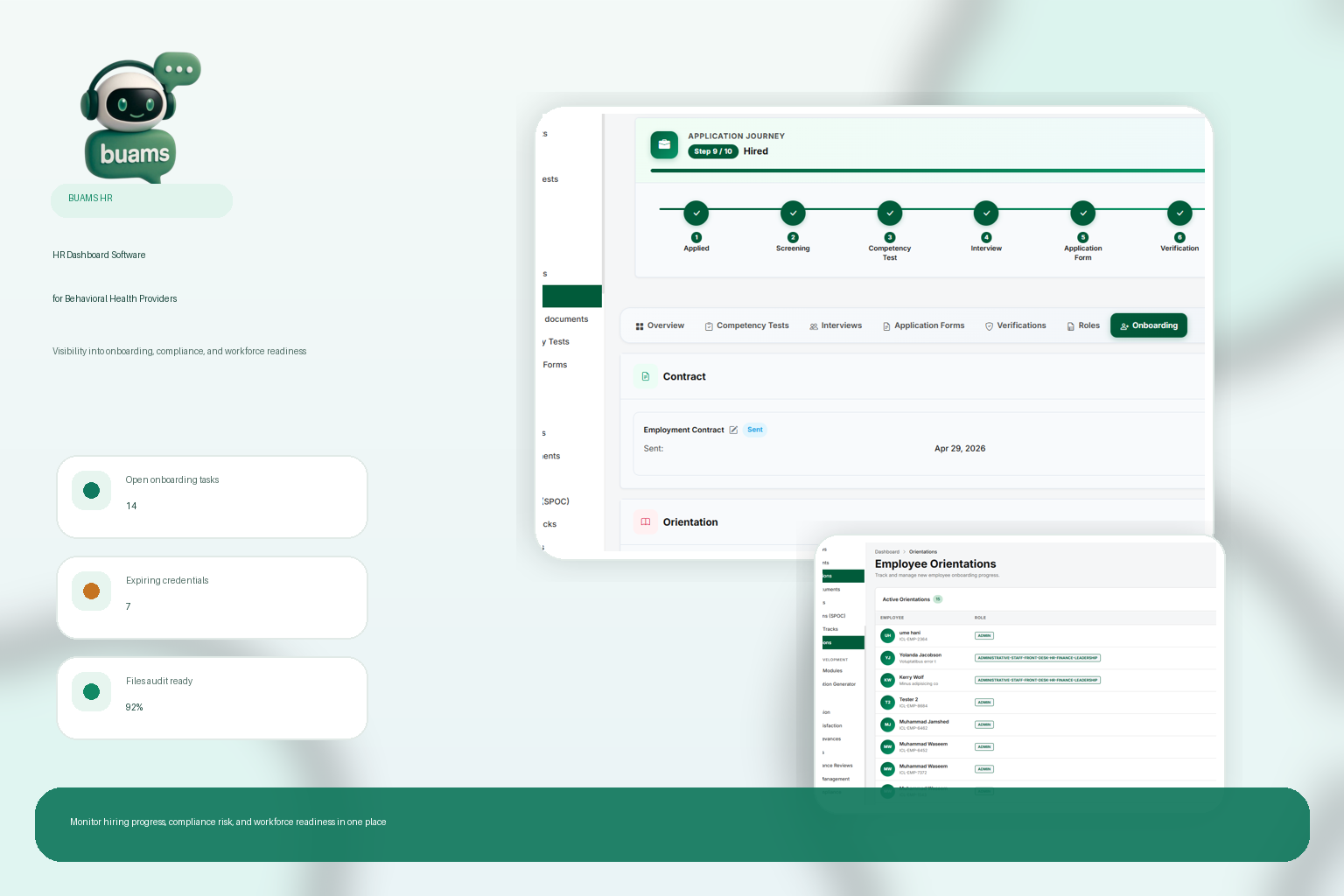
BUAMS HR supports a more practical self service model by connecting employee-facing tasks with the records and compliance workflows HR teams already need. Organizations can centralize onboarding steps, collect and store employee documents, manage policy acknowledgments, and keep workforce records organized in one system.
Instead of relying on inboxes and spreadsheets, HR can see what is complete, what is overdue, and where follow-up is needed. That makes it easier to reduce ticket volume without giving up oversight. For behavioral health providers that need to move quickly while staying audit ready, that combination matters.
Final Thoughts
Employee self service software is not just about convenience for staff. It is a practical way to reduce repetitive HR work, improve response time, and keep workforce records cleaner across the organization. For behavioral health providers, the best systems help employees complete routine tasks confidently while giving HR better control over documentation, compliance, and readiness.
When self service is built into a broader HR workflow, teams spend less time answering the same requests and more time supporting hiring, retention, and care delivery. That is the kind of operational improvement BUAMS HR is designed to support.