Behavioral health organizations cannot afford preventable turnover. When open roles stay vacant, supervisors stretch too thin, onboarding slows down, and continuity of care becomes harder to protect. That is why many growing providers are now evaluating employee retention software as part of a broader HR strategy, especially when they need better visibility into training completion, documentation gaps, and early warning signs that teams need support.
For behavioral health employers, retention is not just about annual reviews or engagement surveys. It is tied to whether new hires complete onboarding on time, whether supervisors can track readiness consistently, and whether HR can act before small process failures turn into frustration or burnout. A practical system helps leaders reduce that friction and build a more stable workforce.
Key Takeaways
What Is Employee Retention Software?
Employee retention software is a set of tools and workflows that helps organizations identify issues affecting workforce stability and respond with more consistency. In practice, that can include onboarding completion tracking, policy acknowledgment records, supervisor follow-up, document management, required training visibility, and reporting that shows where the employee experience is breaking down.
In behavioral health settings, retention software works best when it supports the entire employee lifecycle instead of focusing on one isolated metric. A provider may lose staff because orientation takes too long, credentials are not reviewed fast enough, expectations differ across programs, or supervisors lack a simple way to monitor completion and readiness. Software should help HR teams spot these operational problems early and resolve them before they contribute to turnover.
Why Retention Is a Behavioral Health HR Priority
Behavioral health employers operate in a demanding environment. Recruiting is competitive, program needs can shift quickly, and employees often work in emotionally intensive roles. If hiring is slow or internal processes feel disorganized, staff may assume the organization is not set up to support them well.
Retention issues also create downstream compliance and service-delivery risks. Every unexpected departure can trigger rehiring costs, schedule strain, rushed onboarding, and delayed supervision. When turnover becomes routine, HR teams spend more time replacing staff than strengthening the systems that would help employees remain successful.
A retention-focused HR process does not eliminate every resignation, but it does improve the basics that influence day-to-day trust. Employees are more likely to stay when expectations are clear, required documents are easy to complete, supervisors can follow progress, and administrative delays do not block their work.
Common Signals That Retention Risk Is Rising
Retention problems rarely appear without warning. HR leaders often see patterns before they show up in resignation numbers, but those patterns are easy to miss when information is spread across emails, spreadsheets, shared drives, and manual reminders.
Slow or inconsistent onboarding
If new hires wait days for forms, policy acknowledgments, training assignments, or role-specific requirements, their first impression is confusion. A difficult first week can damage confidence before employees fully join the team.
Unclear accountability for follow-up
When managers, HR staff, and supervisors are unsure who owns each next step, tasks stay open longer than they should. Employees notice when questions go unanswered or when approvals stall.
Compliance work that feels reactive
Repeated last-minute requests for documents, certifications, or policy sign-offs create frustration. Staff may feel they are constantly being chased for items that should have been organized earlier.
Limited visibility across programs or locations
Multi-site providers can struggle to see where certain teams have stronger completion rates, faster ramp-up, or fewer documentation gaps. Without a shared system, successful retention practices stay local instead of becoming standard.
What to Look For in Employee Retention Software
Behavioral health organizations should look beyond generic engagement features and focus on tools that improve operational consistency. The right platform reduces friction for both employees and administrators.
How Better HR Operations Support Retention
Retention is shaped by the employee experience long before an exit interview. When HR systems are organized, staff spend less time chasing paperwork and more time learning their role, meeting their team, and becoming productive with confidence.
That matters in behavioral health because the workforce often includes licensed clinicians, support staff, direct care employees, and managers with different documentation needs. A fragmented process creates inconsistency. A centralized one makes it easier to standardize expectations while still supporting different roles and programs.
Stronger HR operations also help leadership respond with better timing. If one location consistently has delayed onboarding steps or missing policy acknowledgments, that signal can lead to process improvement, manager coaching, or staffing support before turnover increases further.
How BUAMS HR Helps
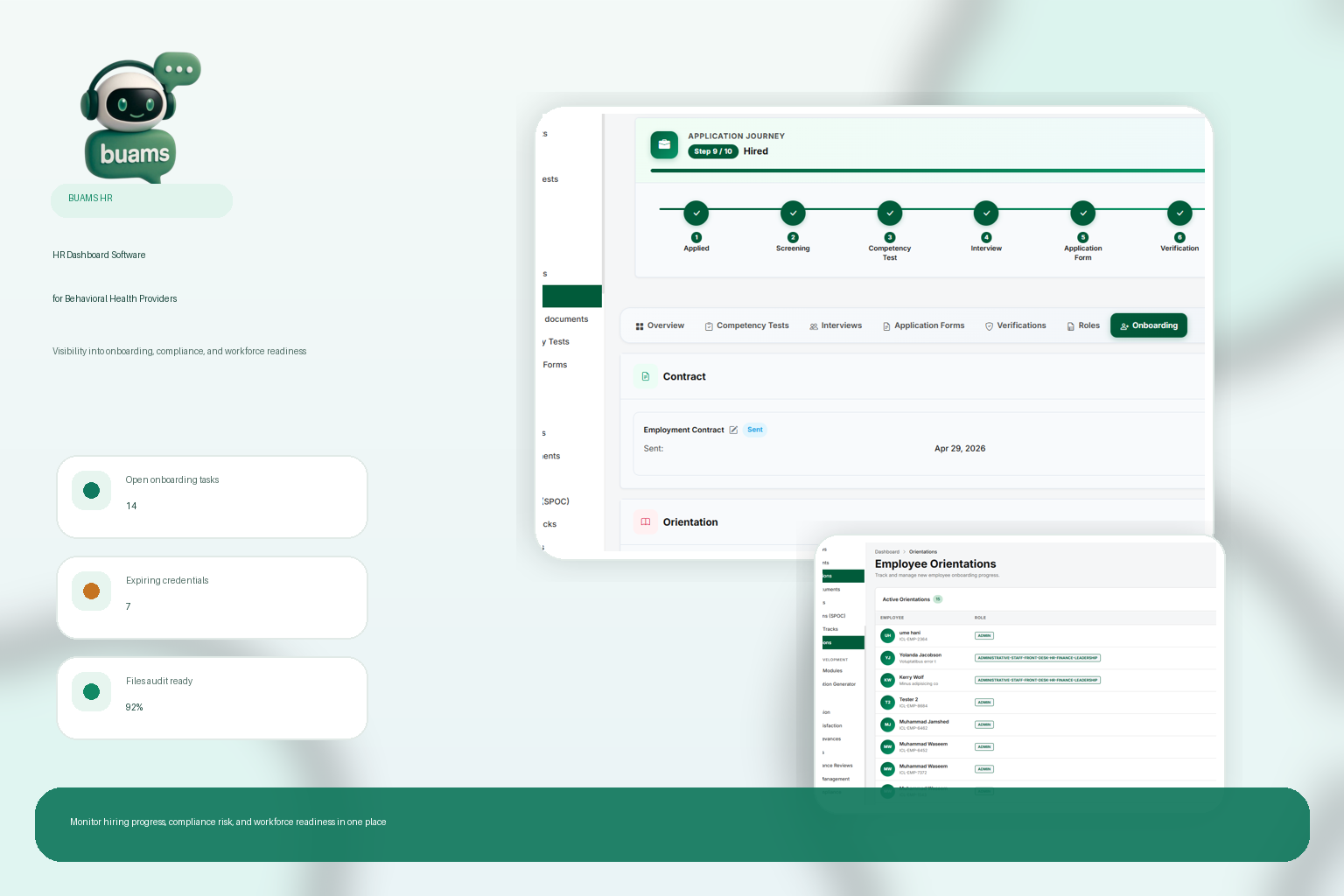
BUAMS HR helps behavioral health organizations build retention-friendly HR operations by keeping onboarding, employee files, and compliance workflows in one system. Instead of relying on disconnected tracking methods, teams can standardize tasks, organize required records, and improve follow-up across the employee lifecycle.
With BUAMS HR, organizations can create clearer onboarding experiences, keep HR documentation easier to access, and give supervisors better visibility into completion status. That operational clarity supports a stronger first impression for new hires and reduces the administrative friction that often contributes to disengagement.
For providers managing multiple teams or programs, BUAMS HR also makes it easier to compare workflow consistency and support accountability. When HR leaders can see where delays or gaps happen, they can intervene earlier and strengthen the conditions that help employees stay.
Final Thoughts
Employee retention software is most valuable when it improves the everyday HR processes that shape trust, readiness, and support. In behavioral health, that means reducing onboarding delays, keeping compliance expectations organized, and giving supervisors a better view of what employees need to succeed.
Providers that treat retention as an operational discipline, not just a staffing outcome, are better positioned to protect continuity, reduce avoidable turnover, and create a more stable workforce over time.