Employee Offboarding Software for Behavioral Health Providers: How to Protect Access, Records, and Compliance During Staff Exits
When an employee leaves a behavioral health organization, the work does not end with a resignation letter or final shift. HR teams still need to collect documentation, remove system access, confirm final policy steps, preserve employee records, and make sure supervisors know what has been completed. If those tasks are handled through email threads, handwritten checklists, or memory, important details can slip.
Employee offboarding software gives behavioral health providers a more controlled way to manage departures without creating unnecessary administrative burden. For organizations handling sensitive employee data, regulated workflows, and multiple programs or locations, that structure helps protect both compliance and continuity.
Key Takeaways
What Is Employee Offboarding Software?
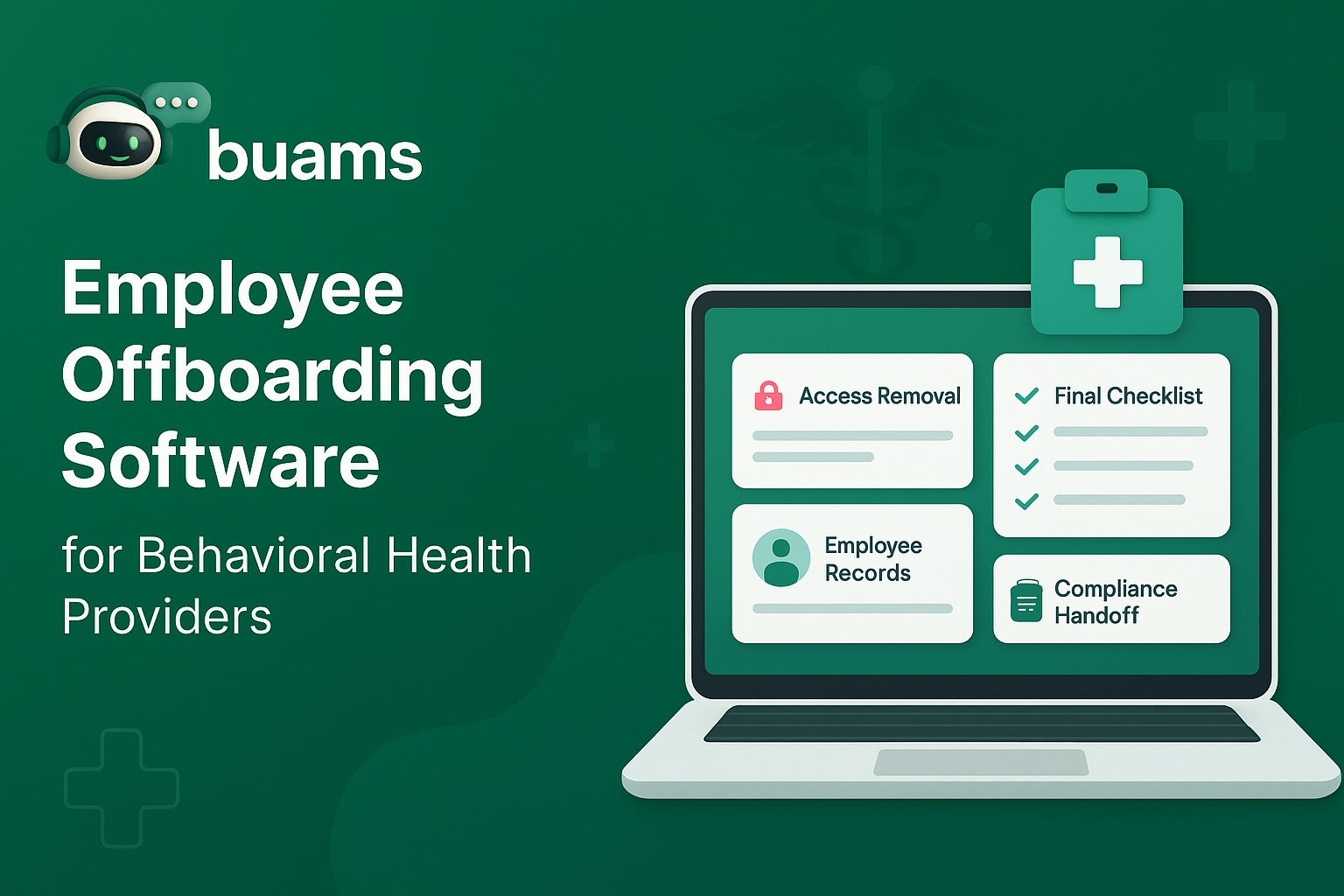
Employee offboarding software is a system that helps HR teams coordinate the tasks, documents, approvals, and status updates involved when a staff member leaves the organization. Instead of relying on separate spreadsheets or manual reminders, the process can be tracked in one workflow with visible ownership and completion status.
In behavioral health settings, offboarding often includes more than collecting company property. Teams may need to document the reason for separation, confirm final acknowledgments, update employee files, notify payroll, remove access to clinical or administrative systems, and preserve records for future audits or internal reviews. Software helps keep those steps connected.
Why Offboarding Matters in Behavioral Health
Behavioral health providers work in environments where staff may have access to protected information, sensitive internal documents, scheduling systems, supervision records, and role-specific compliance materials. A weak offboarding process can leave the organization exposed if access remains active too long or if separation records are incomplete.
Operationally, poor offboarding also creates confusion. Supervisors may assume HR handled the file update. IT may not know the employee's last day changed. Compliance teams may discover missing paperwork only when a record is requested later. When organizations standardize the exit process, those handoffs become more reliable.
Common Gaps in Manual Offboarding
Many separation issues come from fragmented workflows rather than lack of effort. Common breakdowns include:
These issues can create security risk, weaken documentation quality, and make routine separation events harder to manage than they should be.
What to Look for in Employee Offboarding Software
Role-Based Exit Checklists
Different roles may need different offboarding steps. A clinician, program manager, and administrative team member may each require different access removal, file review, or handoff tasks. Software should make those requirements easier to assign consistently.
Clear Task Ownership
Offboarding works better when every step has a visible owner. HR, supervisors, operations, and IT should be able to see what is pending and what has already been completed.
Centralized Separation Records
Final notices, acknowledgments, and supporting documents should remain connected to the employee file. Centralized records reduce future scrambling when leadership, legal counsel, or auditors need answers.
Access and Workflow Visibility
Organizations need confidence that key systems, folders, and internal tools were reviewed at the right time. A clear status view helps prevent overlooked access and gives HR a more defensible process.
Consistency Across Programs
Behavioral health providers with multiple sites or service lines should not depend on each team inventing its own offboarding method. Standardized workflows support cleaner documentation and more predictable handoffs.
How BUAMS HR Helps
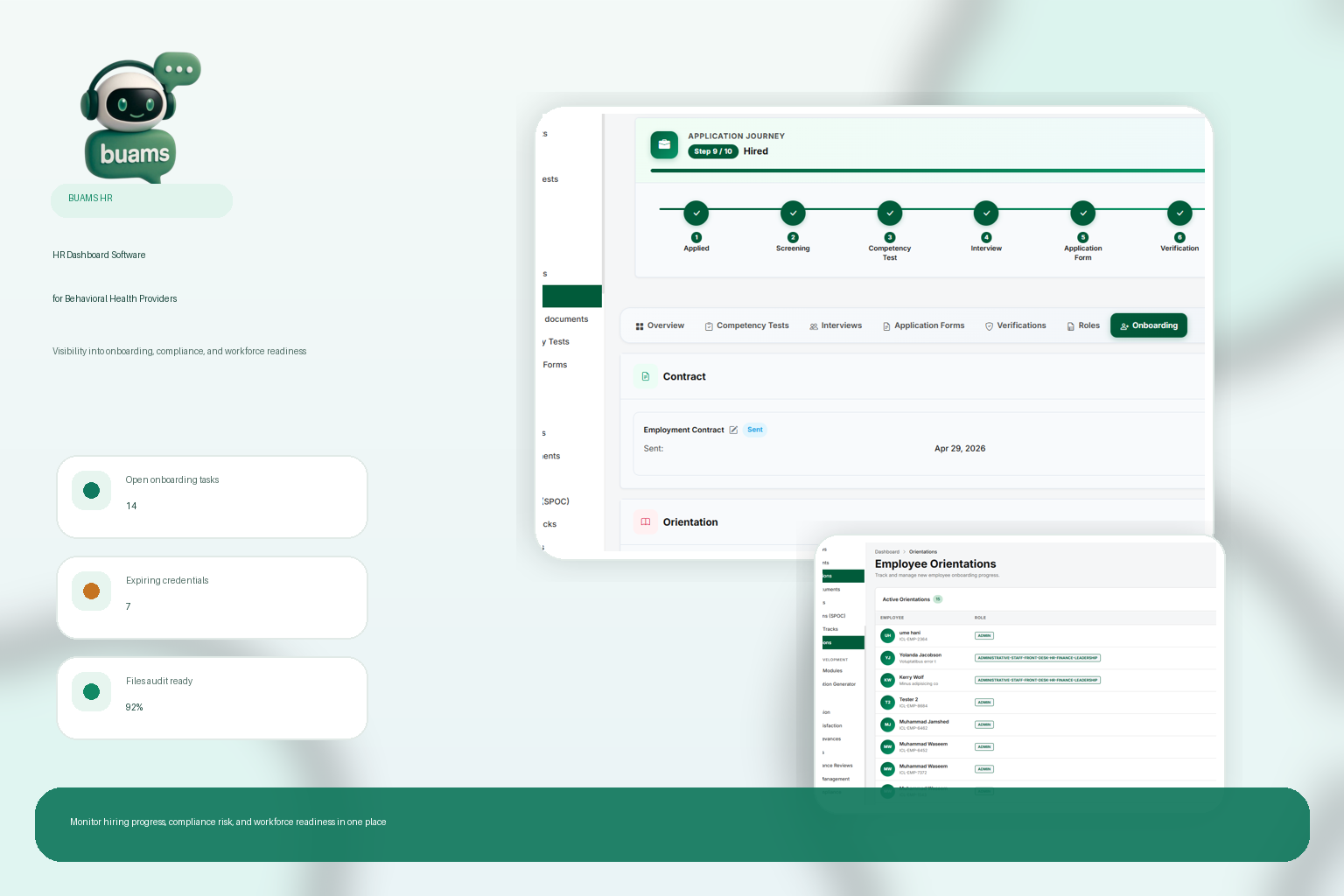
BUAMS HR helps behavioral health organizations keep employee records, documentation workflows, and workforce processes more organized across the employee lifecycle. That includes the moments when staff transition out of the organization and records need to stay complete, current, and easy to review.
With a structured HR system, teams can reduce reliance on scattered spreadsheets and disconnected follow-up. Instead, they can keep separation-related documentation aligned with the rest of the employee record, improve visibility into process completion, and support stronger internal coordination during staffing changes.
Final Thoughts
Employee offboarding software is not only about checking boxes on an employee's last day. It is about protecting access, preserving documentation, and making sure workforce transitions do not create avoidable compliance or operational gaps. For behavioral health providers, a repeatable offboarding workflow can improve security, reduce confusion, and leave the organization better prepared for whatever comes next.