Behavioral health clinics rarely struggle because their teams do not care about HR. They struggle because employee information lives in too many places at once. Hiring notes sit in email, onboarding tasks live in spreadsheets, compliance reminders stay in calendar events, and employee files end up scattered across shared drives. An employee management system gives clinics one operational center for staff data, tasks, and documentation, so HR teams can move faster without losing control.
For organizations balancing recruiting, supervision, credentialing, training, and audit readiness, that kind of visibility matters. When staff records stay current and handoffs are clear, managers spend less time chasing updates and more time supporting the workforce.
Key Takeaways
What Is an Employee Management System?
An employee management system is software that helps organizations maintain complete and current employee records throughout the employment lifecycle. That includes applicant conversion, offer documentation, onboarding steps, required forms, policy acknowledgements, role assignments, training status, and other core HR data.
In behavioral health settings, the need is more urgent because staffing operations affect both compliance and care continuity. Clinics often need to coordinate multiple roles, locations, supervisors, and deadlines. A disconnected process creates small errors that turn into larger operational problems, especially when teams are growing or working across programs.
Why Behavioral Health Clinics Feel the Pain of HR Handoffs
Every handoff adds a chance for information to stall, duplicate, or disappear. A recruiter may mark a candidate ready for hire, but operations may not see which documents are complete. A supervisor may assume orientation is finished, while HR is still waiting on acknowledgements. A compliance lead may discover that a file is missing a required item only after a review is already underway.
Behavioral health clinics often manage high-volume, people-centered work with lean administrative teams. That means HR processes have to be structured enough to keep records accurate without creating extra friction for staff. When teams rely on disconnected tools, they spend time reconciling differences instead of moving work forward.
Signs Your Current Process Needs an Upgrade
If your clinic is evaluating process improvements, watch for a few common signals:
These issues are not just administrative annoyances. They affect start dates, supervisor confidence, response times, and audit readiness.
What to Look for in an Employee Management System
Centralized employee records
Your system should make it easy to locate the current version of each employee file element without searching across platforms. A central record reduces duplication and gives HR, operations, and leadership a clearer source of truth.
Workflow visibility
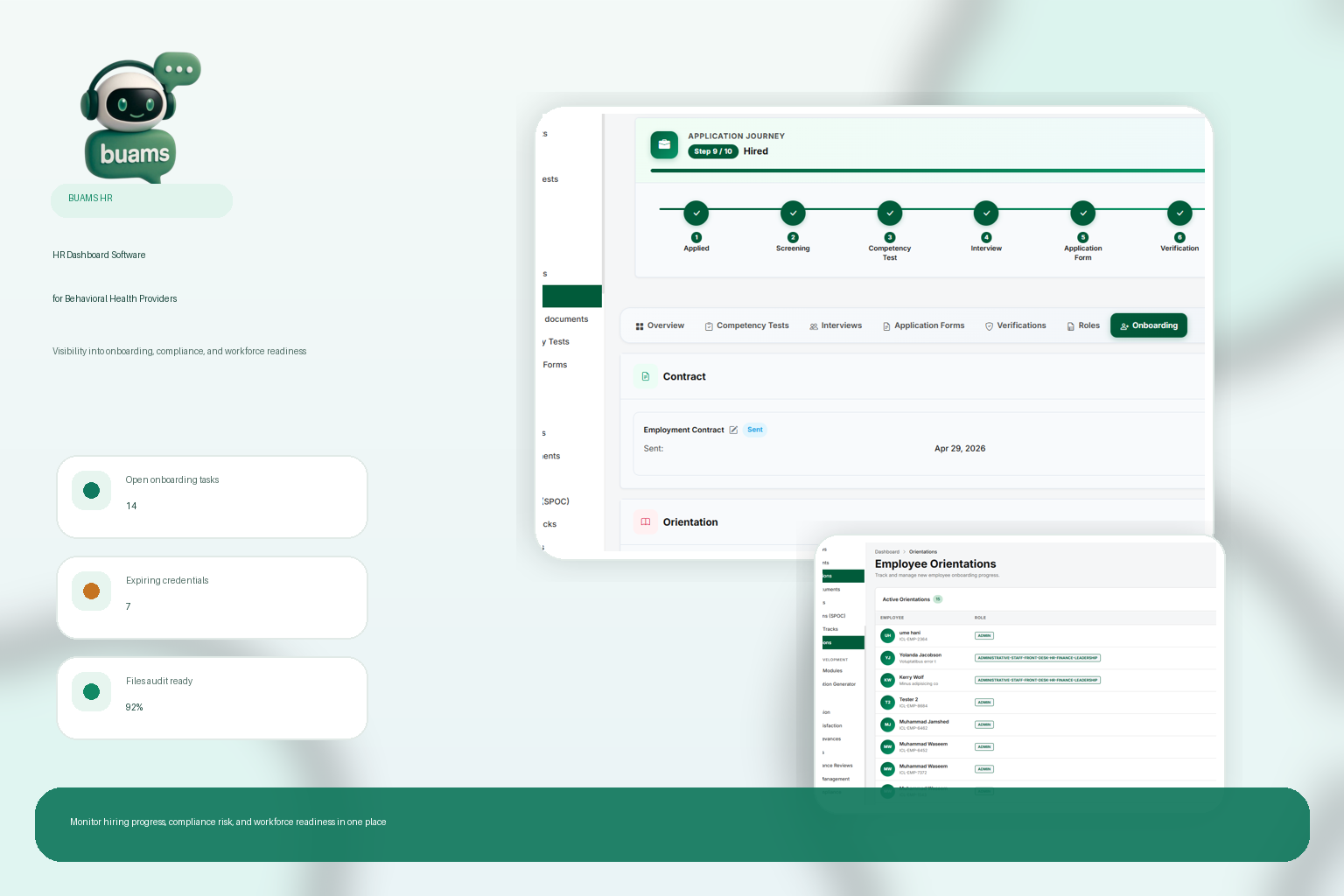
Behavioral health organizations need more than static storage. They need to see where an employee is in the hiring or onboarding process, which tasks are complete, and what still needs attention. Clear workflow views help reduce unnecessary follow-up and keep handoffs from going cold.
Role-based access and accountability
Not everyone should see everything. A strong system lets clinics give each user the visibility they need while protecting sensitive information. At the same time, it should make ownership clear so tasks do not sit unclaimed between HR, supervisors, and operations.
Reminders for time-sensitive requirements
Forms, acknowledgements, orientation steps, and credential-related items all have timing implications. Automated reminders help staff stay ahead of missing pieces instead of discovering problems after deadlines are missed.
Support for audit-ready documentation
Even when a clinic is not in the middle of a review, employee records should be maintained in a way that supports quick retrieval and clean reporting. An employee management system should make that easier as part of normal operations, not as a separate project.
How Better Employee Management Improves Daily Operations
When clinics move from fragmented tracking to a structured system, several improvements usually happen at once. HR teams spend less time answering status questions because progress is visible. Supervisors gain confidence that new staff are actually moving through onboarding. Leadership gets a better view of bottlenecks, recurring delays, and incomplete files.
Just as important, employees get a smoother experience. Clear expectations, organized documents, and timely follow-up reduce confusion during hiring and onboarding. That first impression matters in behavioral health, where retention often depends on how supported staff feel from the start.
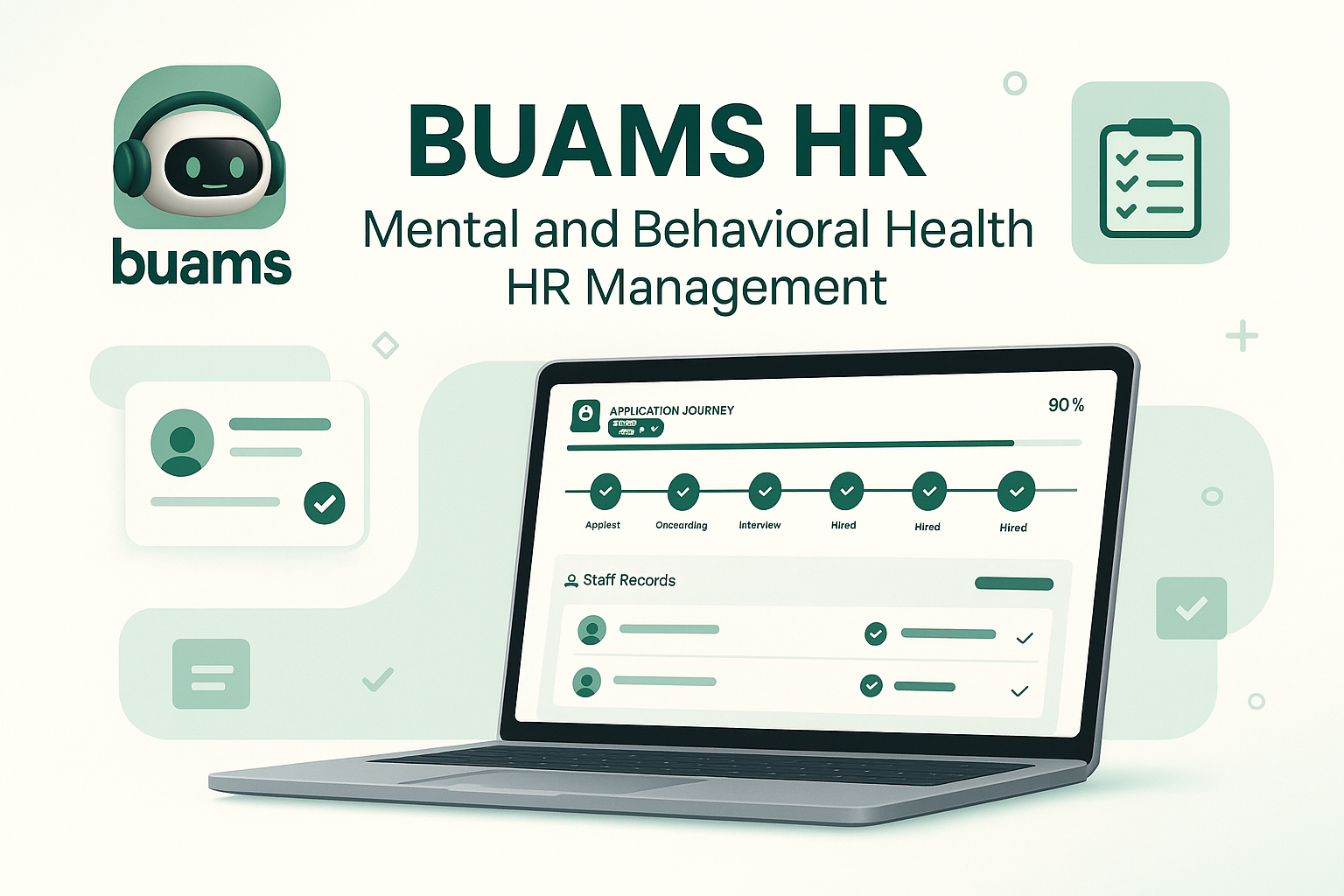
How BUAMS HR Helps Behavioral Health Clinics Keep Staff Records Current
BUAMS HR is built for behavioral health organizations that need practical structure across workforce operations. Clinics can manage employee records, organize onboarding workflows, monitor progress, and maintain documentation in one system designed for operational clarity.
Instead of relying on scattered tools and manual updates, teams can use BUAMS HR to keep hiring and onboarding moving while preserving the documentation needed for internal oversight and compliance support. That means fewer missed handoffs, better visibility into staff status, and a more dependable process for keeping employee information current.
Final Thoughts
An employee management system is not just a convenience for growing clinics. It is a foundation for cleaner handoffs, stronger documentation, and more reliable workforce operations. Behavioral health providers already manage enough complexity in care delivery. HR systems should reduce that burden, not add to it.
For clinics looking to improve record accuracy, onboarding consistency, and day-to-day coordination, the right system can make a measurable difference. The goal is simple: one place to manage the work, fewer gaps between teams, and more confidence that employee information is complete when it matters.