Continuing Education Tracking Software for Behavioral Health Providers: How to Keep CEU Deadlines, Proof, and Role Requirements Organized
Behavioral health organizations depend on licensed professionals whose credentials must remain current and properly documented. When continuing education requirements are tracked through spreadsheets, email reminders, or disconnected folders, deadlines become harder to manage and proof records become easier to miss. That creates unnecessary administrative pressure for HR teams, supervisors, and clinicians alike.
That is why many providers are now investing in continuing education tracking software to organize CEU requirements, centralize documentation, and improve visibility across roles and programs. Instead of reacting to renewal deadlines at the last minute, organizations can build more reliable systems that support compliance and reduce operational risk.
For behavioral health employers, CEU tracking is not just a licensing task. It is part of maintaining workforce readiness, protecting service continuity, and helping employees stay focused on care delivery rather than paperwork confusion.
Key Takeaways
- Continuing education tracking software helps behavioral health organizations manage CEU deadlines, proof documents, and role-based requirements more consistently.
- Manual tracking methods often create compliance gaps, delayed renewals, and unnecessary administrative workload.
- Centralized systems improve visibility for HR teams, supervisors, and employees.
- Organized CEU management supports workforce stability, onboarding readiness, and audit preparation.
- Behavioral health providers benefit most from platforms designed to handle role-specific requirements and documentation workflows.
What Is Continuing Education Tracking Software?
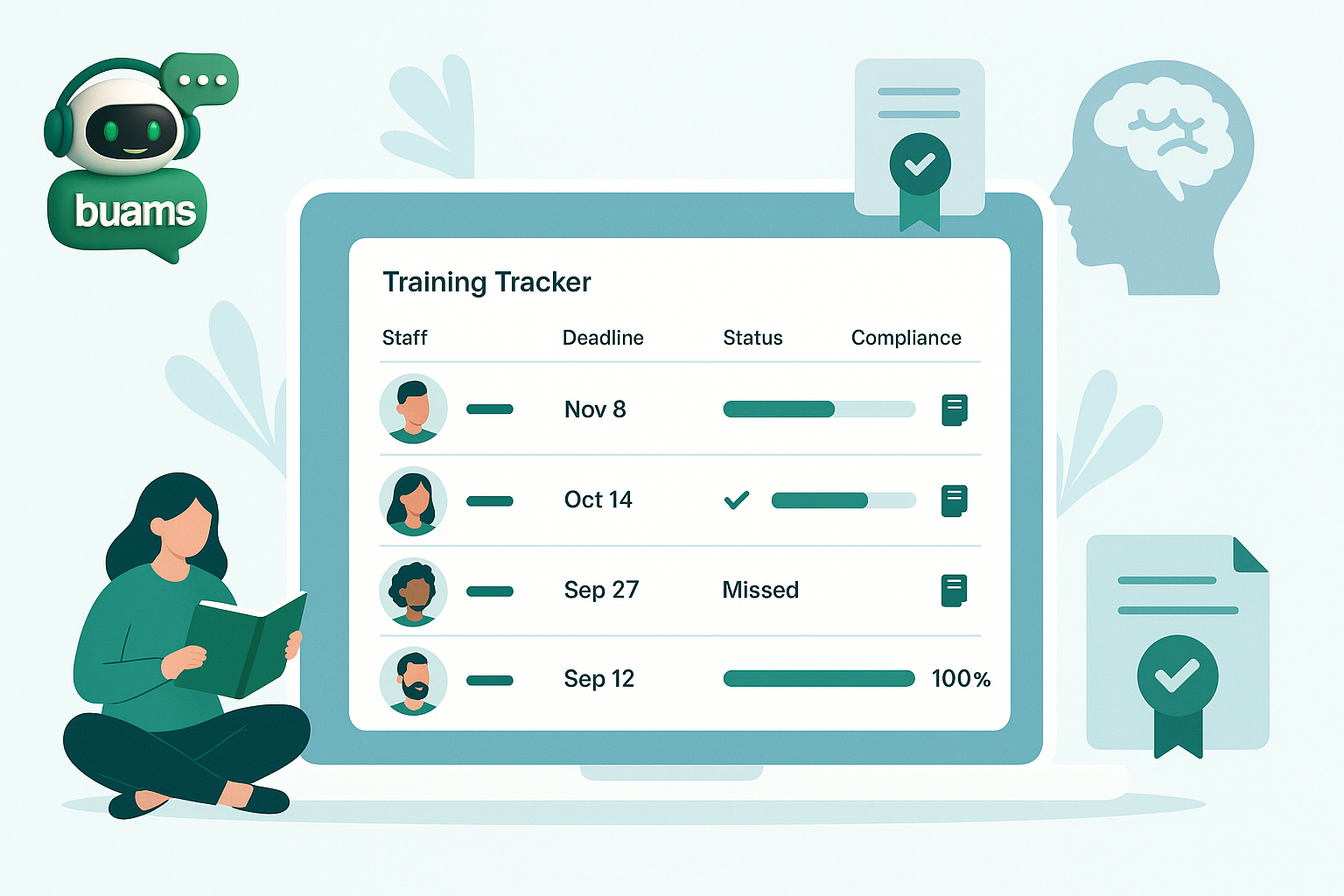
Continuing education tracking software is a system that helps organizations monitor professional development requirements, certification deadlines, completed CEU hours, and supporting documentation for employees.
In behavioral health settings, these platforms are often used to:
- Track license renewal timelines
- Store CEU certificates and proof documents
- Monitor role-specific education requirements
- Send reminders before deadlines
- Improve reporting across departments or locations
- Support compliance audits and credential reviews
The goal is not simply to record completed training. Effective software creates a structured process that keeps employees and administrators aligned throughout the credentialing lifecycle.
For organizations managing clinicians, counselors, case managers, support staff, and supervisors across multiple programs, centralized CEU tracking reduces confusion and improves accountability.
Why CEU Tracking Matters in Behavioral Health
Behavioral health providers operate in an environment where licensing and credential compliance directly affect staffing readiness and service delivery. If continuing education records are incomplete or renewal deadlines are missed, organizations may face scheduling disruptions, administrative delays, or compliance concerns.
Manual systems make these risks harder to control. HR teams may spend hours searching for certificates, confirming hours manually, or sending repeated follow-up emails to employees who are unsure what is still outstanding.
As organizations grow, those challenges multiply. Different roles may require different CEU categories, renewal schedules, or documentation standards. Without a shared system, processes become inconsistent across programs and locations.
Strong CEU management helps organizations:
- Maintain accurate credential records
- Reduce last-minute renewal issues
- Improve audit readiness
- Support employee accountability
- Minimize avoidable administrative stress
- Protect continuity of care
When employees can clearly see what is required and HR teams can monitor progress centrally, compliance becomes more manageable for everyone involved.
Common Problems With Manual CEU Tracking
Many behavioral health organizations recognize the limitations of spreadsheets and shared drives only after compliance issues begin affecting operations.
Missed renewal deadlines
Without automated reminders or centralized visibility, employees may forget important deadlines until renewal dates are too close to manage comfortably.
Incomplete proof documentation
Certificates are often stored in emails, personal folders, or disconnected systems. During audits or reviews, locating proof can become time-consuming and inconsistent.
Different standards across programs
Multi-site or multi-program organizations may track CEUs differently depending on the manager or department. That inconsistency creates confusion and weakens accountability.
Limited visibility for supervisors
Managers may not know which employees are nearing expiration or missing required hours until problems escalate.
Administrative overload for HR teams
Manual follow-up consumes time that HR teams could spend improving workforce support, onboarding, or employee development processes.
What to Look For in Continuing Education Tracking Software
Behavioral health providers should prioritize systems that improve operational clarity and simplify compliance workflows rather than adding unnecessary complexity.
Centralized employee records
A strong platform keeps CEU documents, licenses, certifications, and renewal timelines in one accessible location.
Automated reminders and notifications
Reminder workflows help employees and supervisors stay ahead of upcoming deadlines instead of reacting at the last minute.
Role-based requirement tracking
Different positions may require different continuing education standards. Software should support role-specific workflows and requirements.
Document storage and proof management
Organizations should be able to securely upload, organize, and retrieve certificates and supporting records quickly.
Reporting and visibility tools
Leadership teams benefit from dashboards and reports that show completion status, approaching expirations, and organization-wide trends.
Multi-location consistency
Providers operating across several clinics or programs need standardized processes that work consistently across teams.
How Better CEU Management Supports Workforce Stability
Continuing education processes influence more than compliance. They also affect how supported employees feel within the organization.
When requirements are unclear or documentation processes are disorganized, employees often experience unnecessary frustration. Repeated reminder emails, last-minute requests, or confusion about expectations can damage confidence in internal operations.
Organized systems reduce that friction. Employees can understand what is required, access their records more easily, and complete tasks with greater confidence. Supervisors also spend less time chasing paperwork and more time supporting team development.
In behavioral health environments where workloads are already demanding, operational clarity matters. Streamlined CEU tracking helps organizations reduce avoidable stress while maintaining workforce readiness.
How BUAMS HR Helps
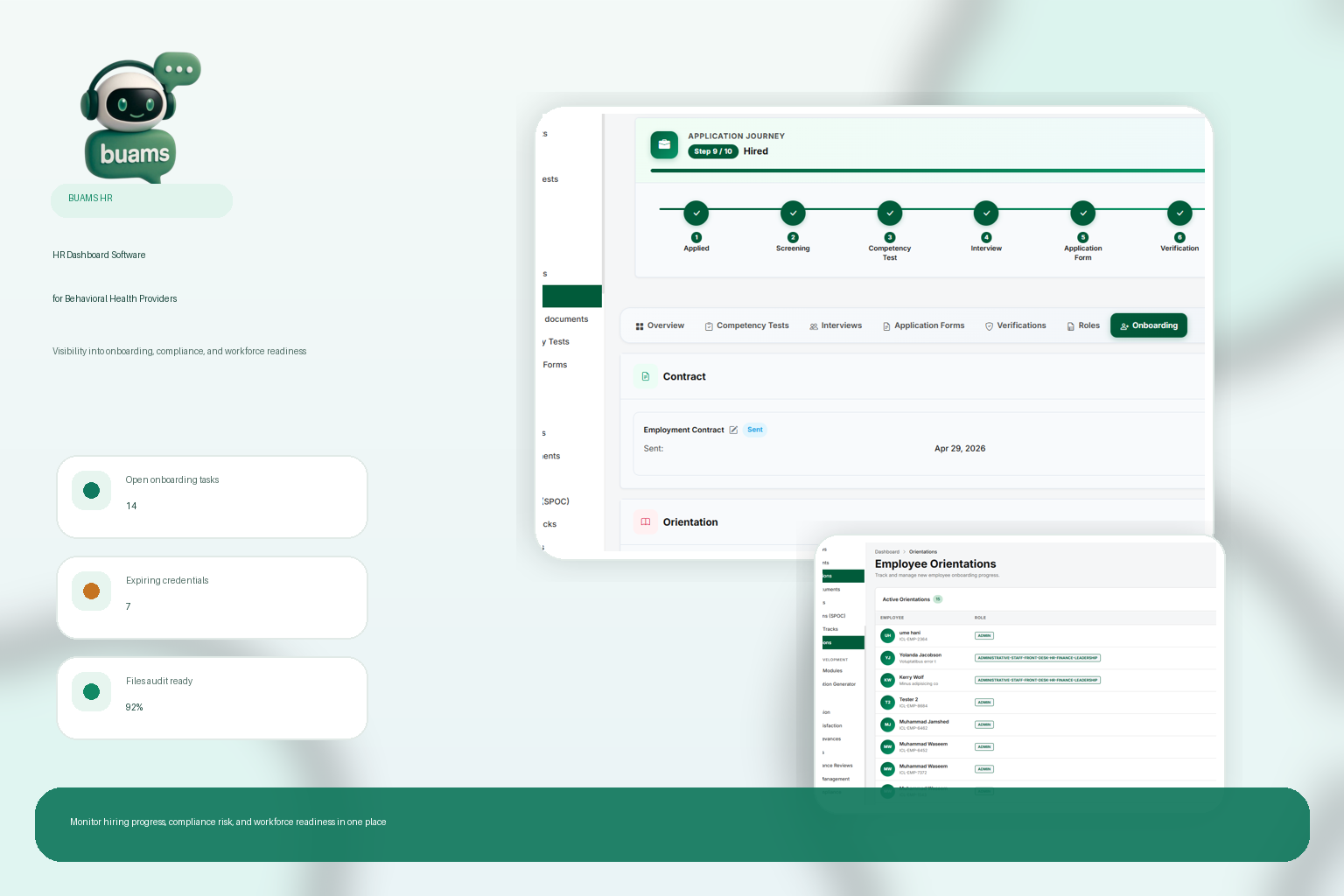
BUAMS HR helps behavioral health organizations organize continuing education workflows by centralizing employee documentation, credential tracking, and compliance visibility in one system.
Instead of relying on spreadsheets or disconnected storage methods, teams can manage CEU records, monitor deadlines, and keep supporting documentation easier to access across the employee lifecycle.
With BUAMS HR, organizations can:
- Track continuing education requirements more consistently
- Store proof documents securely
- Improve visibility into upcoming renewals
- Standardize workflows across programs and locations
- Support supervisors with clearer completion tracking
- Reduce administrative follow-up and manual coordination
By improving operational organization, BUAMS HR helps providers strengthen compliance processes while creating a smoother experience for employees and administrators alike.
Final Thoughts
Continuing education tracking software helps behavioral health organizations move from reactive compliance management to more organized, proactive operations. By centralizing CEU records, improving deadline visibility, and simplifying proof management, providers can reduce administrative strain and support workforce readiness more effectively.
For behavioral health employers managing multiple roles, programs, and licensing requirements, stronger CEU tracking processes help protect continuity, improve accountability, and create a more stable operational foundation over time.