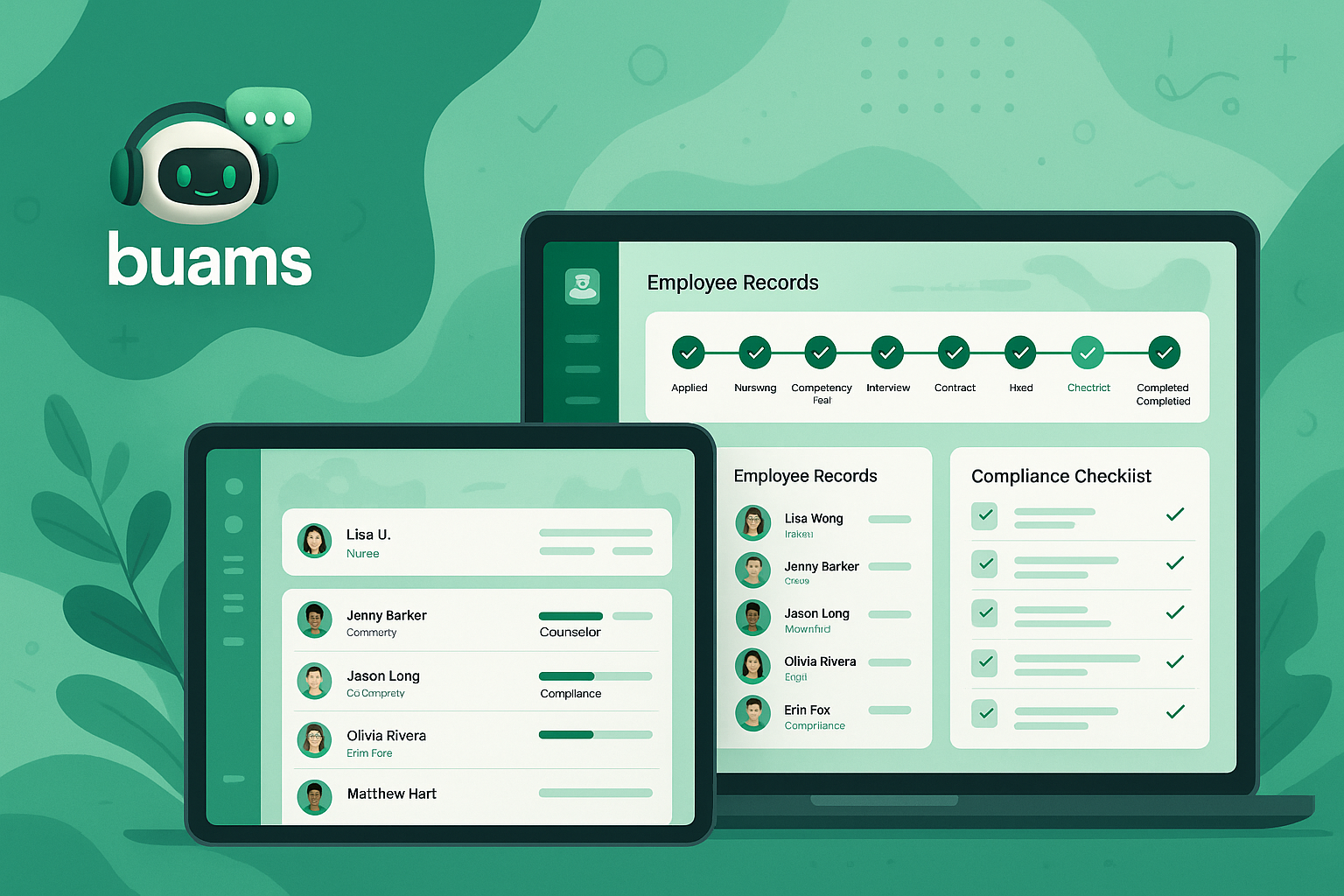
Behavioral health agencies juggle more than hiring and payroll. HR teams also need to stay ahead of license renewals, training deadlines, policy acknowledgments, supervision records, and employee file updates that support audit readiness. When those requirements live across spreadsheets, email reminders, and paper files, small misses can quickly become compliance risks.
Compliance tracking software gives organizations a more reliable way to monitor workforce requirements before they become urgent problems. For behavioral health providers, that matters because expired credentials, missing documents, or inconsistent follow-up can affect operations, accreditation readiness, and confidence during reviews.
What Is Compliance Tracking Software?
Compliance tracking software is a system that helps HR and operational leaders monitor employee-related requirements tied to internal policy, payer expectations, accreditation standards, and workforce regulations. Instead of relying on manual reminders alone, teams can use a structured platform to organize deadlines, required records, and status updates across the workforce.
In behavioral health settings, compliance tracking often includes active license verification, certification renewals, training completion, signed policy acknowledgments, supervision documentation, and current employee files. The goal is not just storing records. It is making sure the right records are complete, current, and easy to review when needed.
Why It Matters for Behavioral Health Agencies
Behavioral health organizations often manage a mix of clinicians, support staff, supervisors, and administrative employees across multiple programs. Each group may have different documentation and compliance obligations. When tracking is inconsistent, agencies can run into avoidable problems such as expired credentials, missing annual trainings, incomplete file reviews, or delayed responses to accreditation requests.
A dependable compliance tracking process helps agencies reduce preventable risk. It also supports continuity. When staff transition, managers change, or audits come up quickly, teams can still find what they need without rebuilding the picture from scattered systems.
What to Track Beyond Licenses
Many teams start by tracking licenses, but workforce compliance in behavioral health usually extends further. A stronger process includes the broader set of items that affect readiness and accountability.
Tracking these items together gives leaders a clearer picture of workforce readiness. It also helps agencies spot patterns, such as one location falling behind on annual requirements or a specific role needing tighter follow-up.
Best Practices for a Year-Round Compliance Process
Centralize employee records
When compliance records live in disconnected folders or inboxes, teams spend more time searching and less time managing risk. A centralized employee management system makes it easier to keep related information together and review it in context.
Standardize what complete looks like
Define required file components and review expectations by role. Standardization helps managers know what belongs in each employee record and makes internal audits more consistent.
Review deadlines before they become urgent
Waiting until the expiration month is often too late. Teams should monitor renewals and required updates on a recurring schedule so they can follow up early and avoid service disruptions or compliance gaps.
Make audits easier on ordinary days
The best audit readiness software habits are built before an audit is scheduled. When files are kept current and organized throughout the year, external reviews become less disruptive and internal teams feel more prepared.
How BUAMS HR Helps
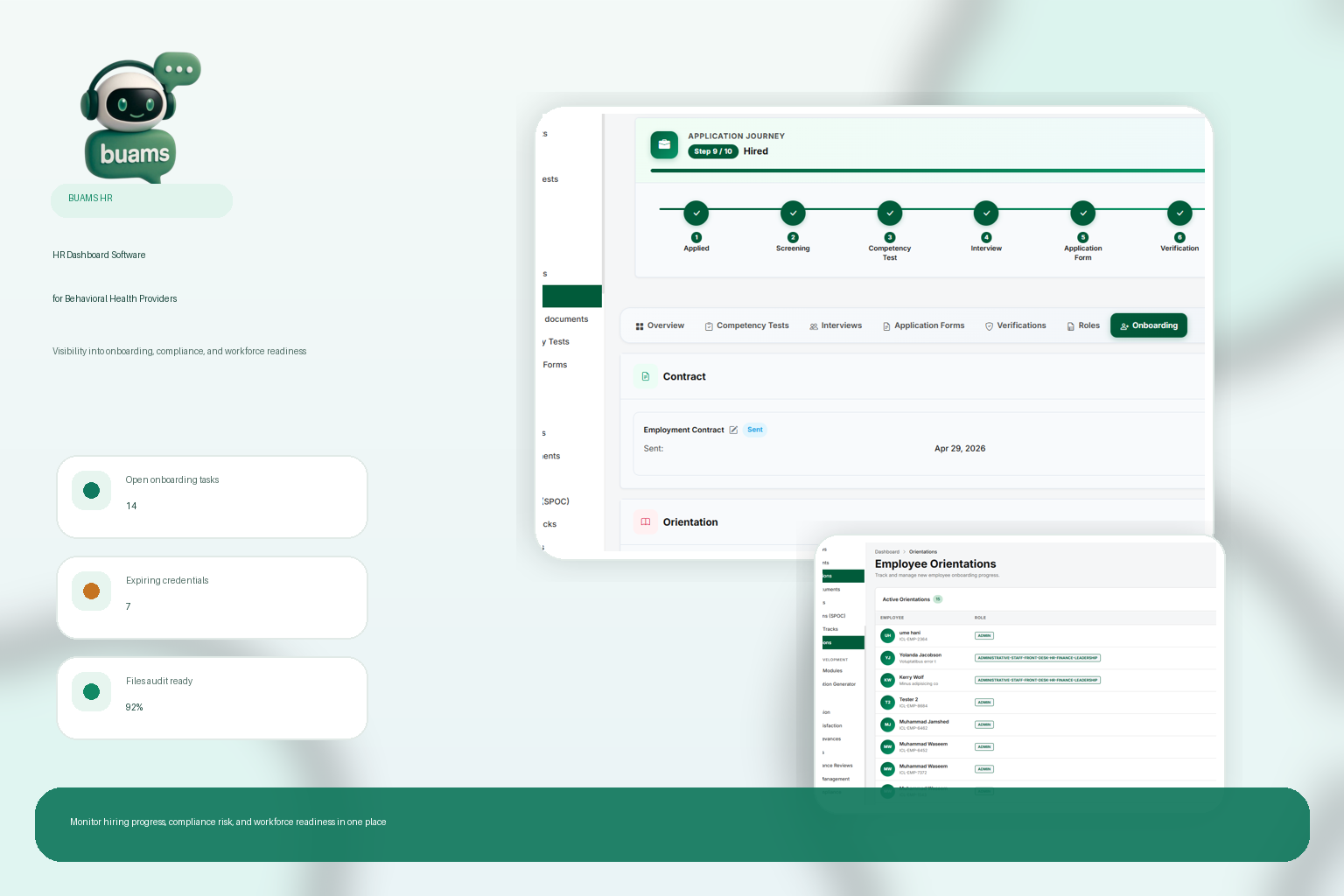
BUAMS HR gives behavioral health agencies a practical way to manage compliance-related HR work inside a centralized human resources platform. Teams can maintain digital employee files, keep important records easier to access, and support a more consistent review process across onboarding, documentation, and ongoing workforce oversight.
For organizations trying to improve healthcare compliance software processes without creating more manual busywork, BUAMS HR supports a cleaner operating model. Instead of chasing paperwork across multiple locations, HR teams can work from a more organized system that helps them stay prepared.
Final Thoughts
Compliance tracking software is most useful when it becomes part of normal HR operations, not just an emergency response before an audit. Behavioral health agencies that centralize records, define clear requirements, and monitor deadlines consistently are better positioned to reduce risk and respond quickly when documentation is needed.
BUAMS HR helps agencies build that foundation with a structured approach to employee records, compliance visibility, and workforce management. For teams that want a more sustainable way to stay organized, that can make a meaningful difference year-round.