CARF Compliance Software for Behavioral Health Providers: How to Keep HR Evidence Organized Year Round
CARF surveys rarely become stressful because teams do not care about compliance. They become stressful because HR evidence lives in too many places, deadlines are tracked manually, and supervisors are asked for documents at the last minute. For behavioral health providers, CARF compliance software can reduce that pressure by giving HR and operations teams one place to track staff records, training completion, acknowledgments, and credential-related documentation.
When employee files are organized and requirements are visible before they expire, teams can spend less time chasing paperwork and more time preparing a confident, accurate story about how the organization supports quality care.
What CARF Compliance Software Means for HR Teams
CARF compliance software is not just a document repository. In practice, it should help behavioral health providers maintain complete employee records, monitor required items, and show that internal processes are followed consistently. HR teams often need quick access to job descriptions, signed policies, onboarding records, training history, disciplinary documentation, supervision evidence, and active credentials or certifications. If those items are scattered across inboxes, shared drives, and paper folders, preparation becomes slow and risky.
A stronger system gives HR leaders a structured way to manage employee documentation over time. That includes knowing what belongs in each file, which items are missing, and which deadlines need attention before surveyors or internal reviewers ask for proof.
Why Year Round Readiness Matters in Behavioral Health
Behavioral health organizations operate in environments where staffing changes, supervisory obligations, and regulatory expectations all move quickly. Waiting until a survey window is near to organize HR files usually exposes avoidable gaps. Missing acknowledgments, incomplete training records, or outdated licenses can create extra work for HR and raise unnecessary questions during reviews.
Year round readiness matters because compliance is easier to maintain than to rebuild. When teams use healthcare compliance software to update files as part of normal operations, they reduce surprises, improve accountability, and protect leadership time. It also helps managers respond faster to internal audits, payer requests, and accreditation-related follow-up.
What to Look for in CARF Compliance Software
The best CARF compliance software helps HR teams maintain complete records, spot issues early, and prepare evidence quickly when leadership or surveyors need it. These are some of the most important capabilities to evaluate.
Centralized digital employee files
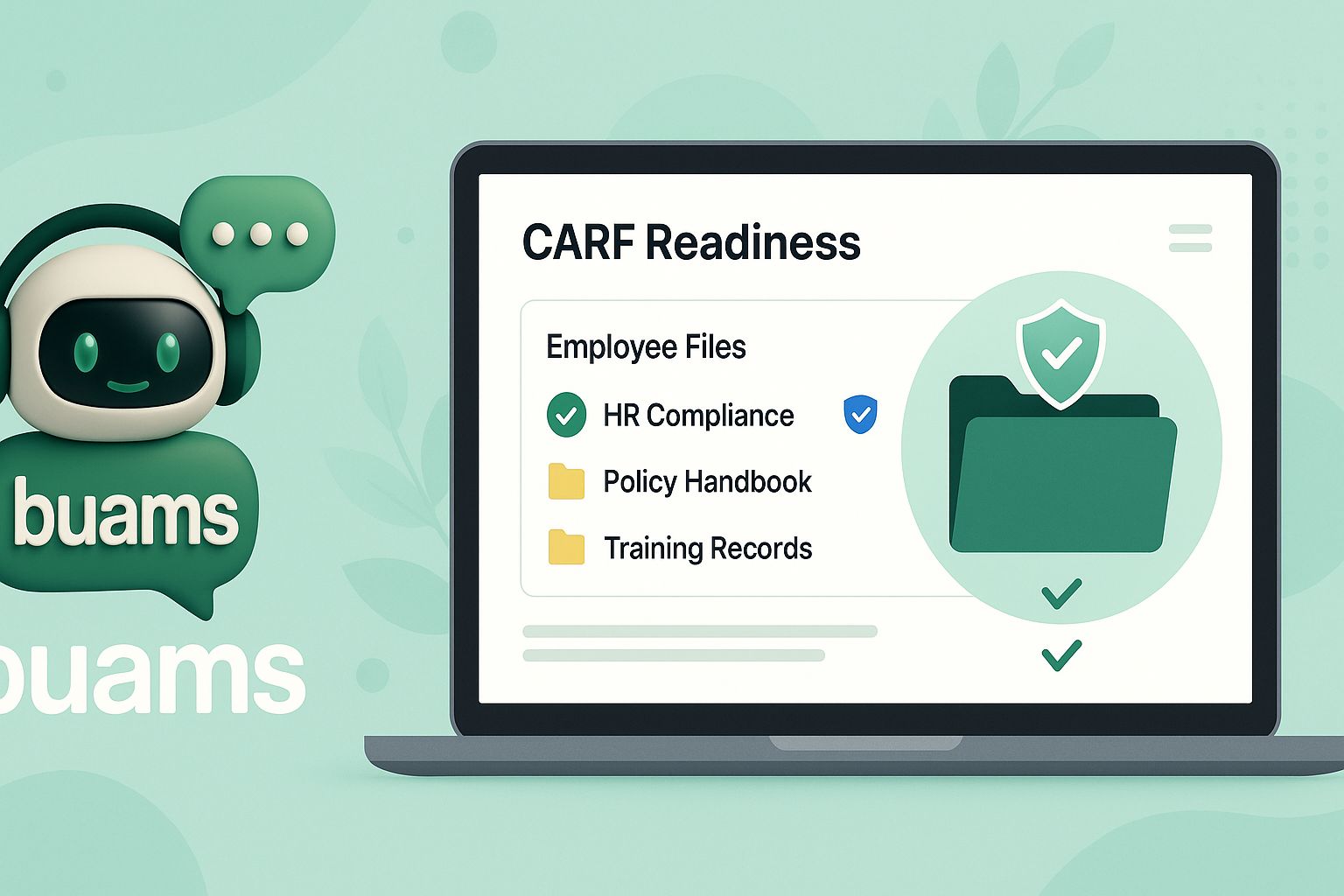
Every employee should have a consistent digital record that is easy to review. HR staff should be able to find required forms, signed acknowledgments, training records, and role-specific documentation without opening several systems.
Document requirement visibility
A useful platform makes missing or expired items visible before they become urgent. That visibility helps HR teams prioritize follow-up and avoid manual spreadsheet audits.
Structured onboarding workflows
Many compliance problems start during hiring. Staff onboarding automation helps teams collect required documents, complete tasks in the right order, and establish cleaner employee records from day one.
Support for supervisory and credential-related oversight
Behavioral health providers often need to track more than basic employment forms. They may also need reliable records around supervision, certifications, and role eligibility. Software should support those workflows in a practical way rather than forcing teams to build workarounds.
Reporting that helps teams prepare evidence quickly
When leadership needs to review file completeness or prepare for an accreditation check, reporting should make the current state obvious. A good system helps teams answer questions quickly instead of scrambling to assemble proof by hand.
Common Gaps That Create CARF Risk
These gaps are common, especially in growing organizations. The issue is usually not effort. It is the lack of a reliable HR management software process that keeps compliance work visible and repeatable.
How BUAMS HR Helps Behavioral Health Providers Stay Audit Ready
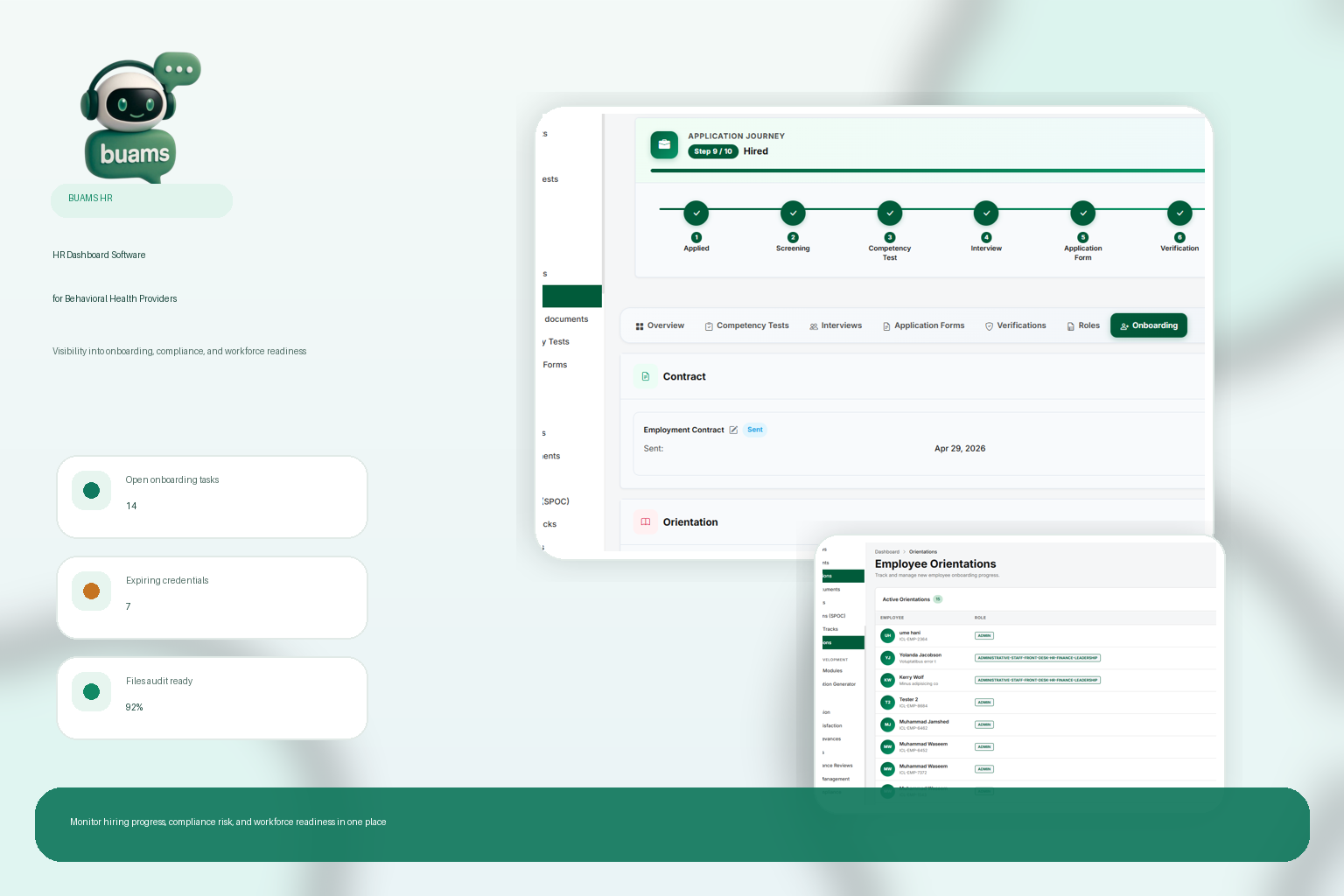
BUAMS HR is built for organizations that need a practical way to manage workforce documentation and compliance activity without adding unnecessary complexity. Teams can maintain digital employee files, standardize onboarding, and improve visibility into missing records and required actions. That makes it easier to prepare for CARF reviews and other internal or external compliance checks.
For behavioral health providers, that matters because workforce compliance is tied directly to service quality and operational confidence. A centralized human resources platform helps HR teams work from a cleaner process, while leaders get a clearer view of where follow-up is needed.
Instead of relying on disconnected systems, providers can use BUAMS HR to create more consistent employee recordkeeping and reduce the last-minute burden that often comes with accreditation preparation.
Final Thoughts
CARF compliance software should help behavioral health providers stay ready before a review is scheduled, not just during a scramble to collect documents. The right employee management system supports organized files, clearer accountability, and faster response when evidence is needed.
For organizations that want a more reliable approach to audit readiness, BUAMS HR offers a practical way to centralize HR records and support a stronger compliance process year round.