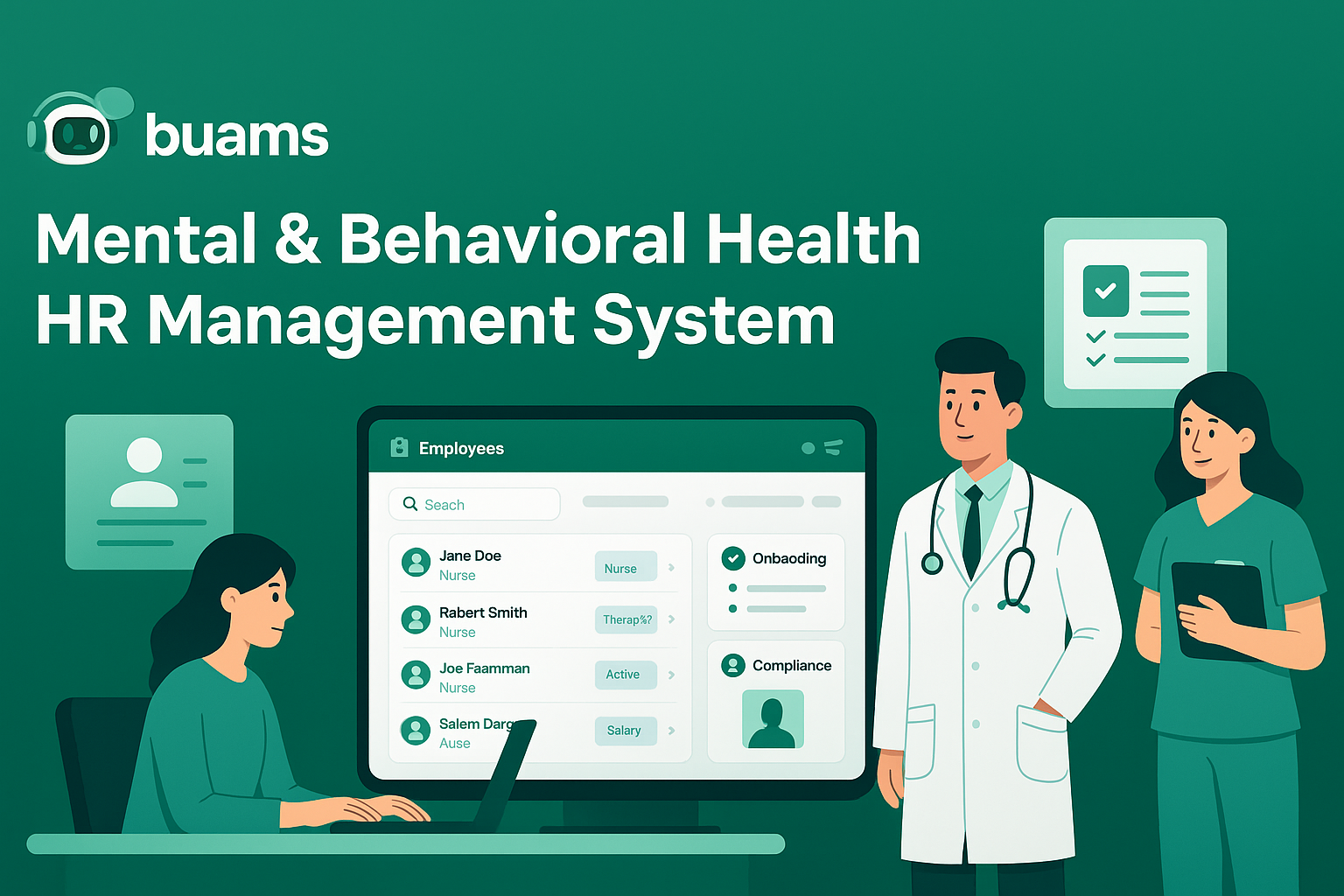
As behavioral health organizations grow, HR data often ends up scattered across spreadsheets, email threads, paper forms, and disconnected systems. That fragmentation creates delays in hiring, makes audits harder, and increases the risk of missed requirements. A behavioral health HRIS gives providers a more reliable way to manage workforce information from recruiting through ongoing compliance.
Key Takeaways
What Is a Behavioral Health HRIS?
A behavioral health HRIS is a human resources information system designed to organize employee data, hiring records, required documents, training history, and compliance workflows for behavioral health providers. Instead of treating HR as a set of disconnected administrative tasks, it creates a structured system for managing workforce information across the employee lifecycle.
For behavioral health agencies, the need is especially practical. Teams often manage licensed clinicians, supervisors, direct care staff, support employees, and multiple service locations at the same time. Each role can carry different onboarding requirements, training obligations, file standards, and renewal timelines. An HRIS helps bring consistency to those moving parts.
Why Standardized Workforce Data Matters
When workforce data is inconsistent, small HR issues become operational problems. A missing document can delay a new hire start date. An outdated credential record can create risk during internal review. Different naming conventions across locations can make reporting unreliable. In a growing organization, those gaps multiply quickly.
Standardization improves more than recordkeeping. It helps leadership see who is ready to work, which steps are complete, where follow-up is needed, and how hiring and retention processes are performing. That visibility supports better staffing decisions while reducing avoidable compliance stress.
Common Signs Your Current HR Setup Is Not Scaling
What to Look for in a Behavioral Health HRIS
Centralized employee records
The system should give HR one dependable place to store employee files, job information, acknowledgments, and supporting documents. That reduces version confusion and makes it easier to confirm record completeness.
Structured onboarding workflows
Behavioral health organizations benefit from onboarding checklists that match role requirements. A good HRIS should help teams assign tasks, collect forms, and track completion without relying on manual reminders alone.
Compliance and credential visibility
Behavioral health HR teams often need to monitor licenses, certifications, training, and supervisory documentation. The right system should make those items visible and easier to review before they become urgent problems.
Reporting that supports real decisions
Data is only useful if it helps teams act. Look for reporting that shows hiring progress, missing records, expiring requirements, and workforce trends in a way that is easy for HR and operations leaders to understand.
How BUAMS HR Helps Behavioral Health Providers
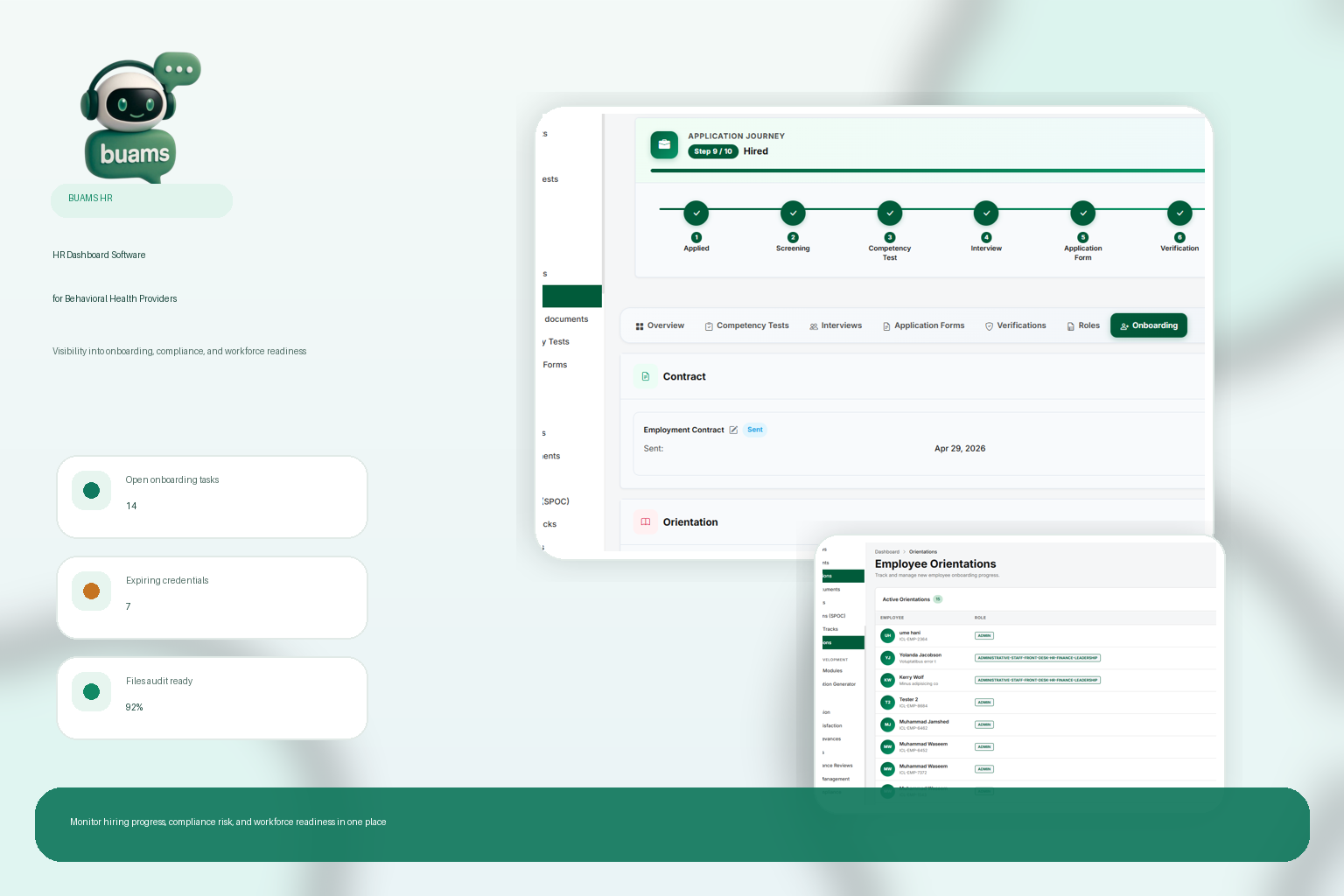
BUAMS HR is built for the realities of behavioral health workforce management. It helps organizations bring hiring, employee files, compliance requirements, and workforce visibility into one environment so HR teams can work from a shared source of truth.
With BUAMS HR, providers can standardize onboarding steps, organize employee documentation, support compliance review, and reduce the handoffs that slow down workforce operations. That is especially valuable for organizations adding programs, opening locations, or trying to improve consistency across teams.
Final Thoughts
A behavioral health HRIS is not just a software upgrade. It is a way to create cleaner workforce data, more repeatable HR processes, and stronger day-to-day readiness as an organization grows. For providers that want less administrative friction and better compliance control, standardizing HR data is a practical place to start.