Applicant Tracking Software for Behavioral Health Providers: How to Reduce Time to Hire Without Losing Compliance
Behavioral health providers often need to hire quickly, but speed alone is not enough. Recruiters, HR leaders, and program managers still have to collect the right documents, confirm role requirements, coordinate onboarding steps, and protect the organization from preventable compliance gaps. When hiring information is scattered across email, spreadsheets, and paper checklists, delays become normal and visibility disappears.
Applicant tracking software gives behavioral health organizations a more consistent way to move candidates from application to offer while keeping hiring workflows organized. For providers that also need strong onboarding, document control, and workforce compliance support, the best approach is not just faster recruiting. It is a connected HR workflow that helps teams hire with confidence.
Key Takeaways
What Is Applicant Tracking Software?
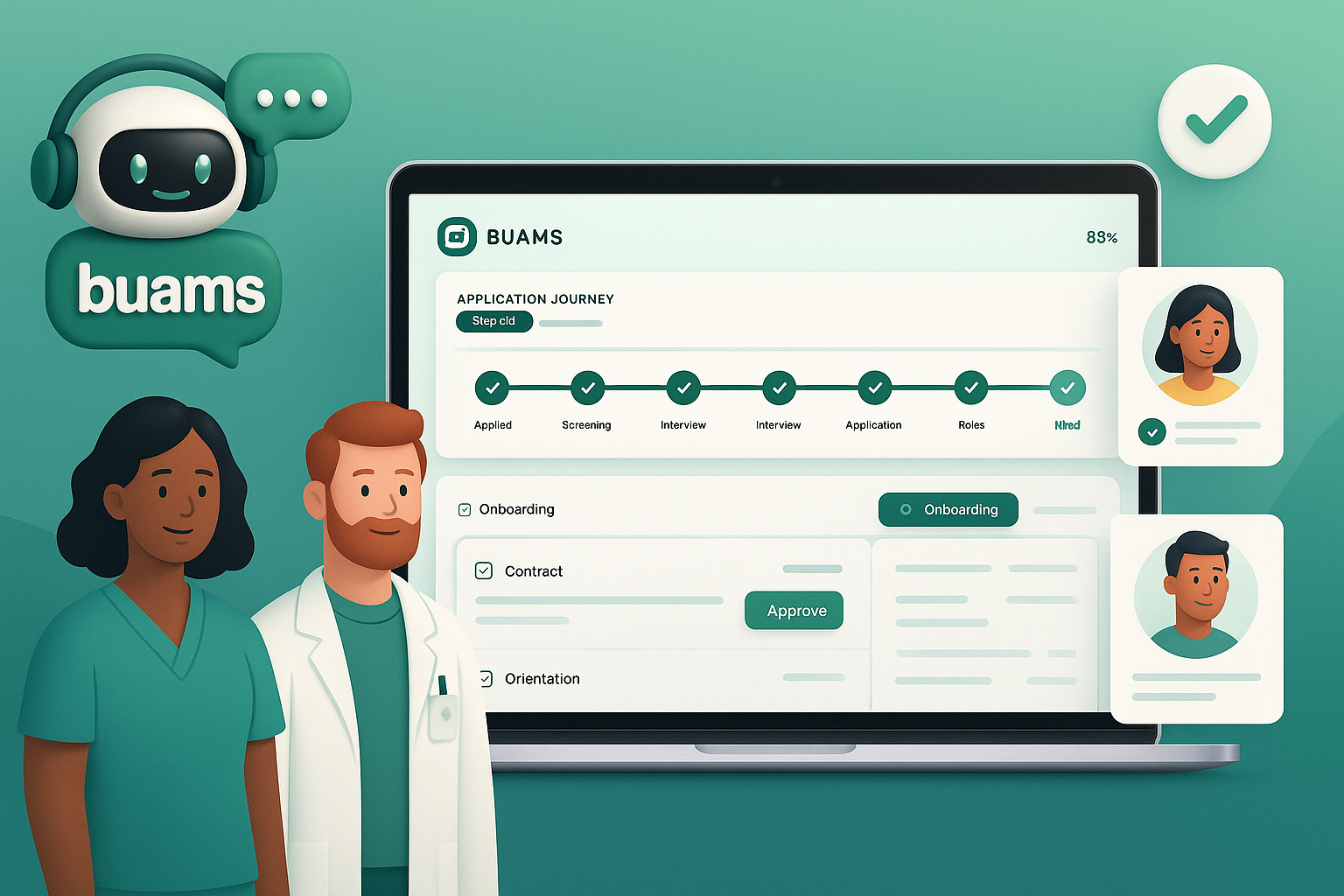
Applicant tracking software is a system that helps organizations manage job postings, incoming candidates, hiring stages, interview coordination, and offer workflows in one place. Instead of relying on disconnected inboxes and manual status updates, teams can view where each candidate stands and what needs to happen next.
In behavioral health, this matters because many roles require more than scheduling interviews and sending offer letters. Providers may need to confirm credentials, capture acknowledgments, collect required documents, and prepare new hires for regulated environments. A hiring system should support that operational reality instead of creating another silo.
Why Hiring Bottlenecks Hit Behavioral Health Teams Hard
Open roles in behavioral health can affect caseload coverage, supervisor capacity, intake timelines, and service continuity. When hiring takes too long, existing staff absorb extra pressure and candidates may accept competing offers before your team completes the process.
Common hiring slowdowns include delayed interview feedback, incomplete application records, unclear ownership of next steps, and repeated requests for the same documents. Problems also appear at the handoff point. A candidate may be marked as hired, but onboarding tasks, policy acknowledgments, and employee file setup do not begin promptly because the information does not move cleanly into HR operations.
What Behavioral Health Providers Should Look For
Clear pipeline visibility
Recruiters and hiring managers should be able to see candidate stages, pending actions, and aging bottlenecks without building manual reports. Visibility helps teams prioritize outreach and prevent strong candidates from stalling in the process.
Consistent hiring workflows
Different roles may need different steps, but the process should still be standardized. That includes application review, interview coordination, offer approval, and transition into onboarding. Standard workflows reduce missed steps and make hiring easier to manage across programs or locations.
Document collection that starts early
Behavioral health organizations often need to gather employment forms, acknowledgments, and role-related documentation quickly. Systems that support organized document collection help teams avoid scrambling after an offer has already been accepted.
Strong handoff into onboarding
One of the biggest weaknesses in recruiting is the gap between selecting a candidate and preparing them to start. A strong system should support a clean transition into onboarding tasks, employee records, and compliance tracking so new hires do not get stuck in limbo.
Role-aware compliance support
Not every position has the same requirements. HR teams need a practical way to track what applies to clinical, administrative, supervisory, or support roles. When role expectations are clear, onboarding becomes more accurate and audit preparation gets easier.
Best Practices for Faster, Safer Hiring
How BUAMS HR Helps
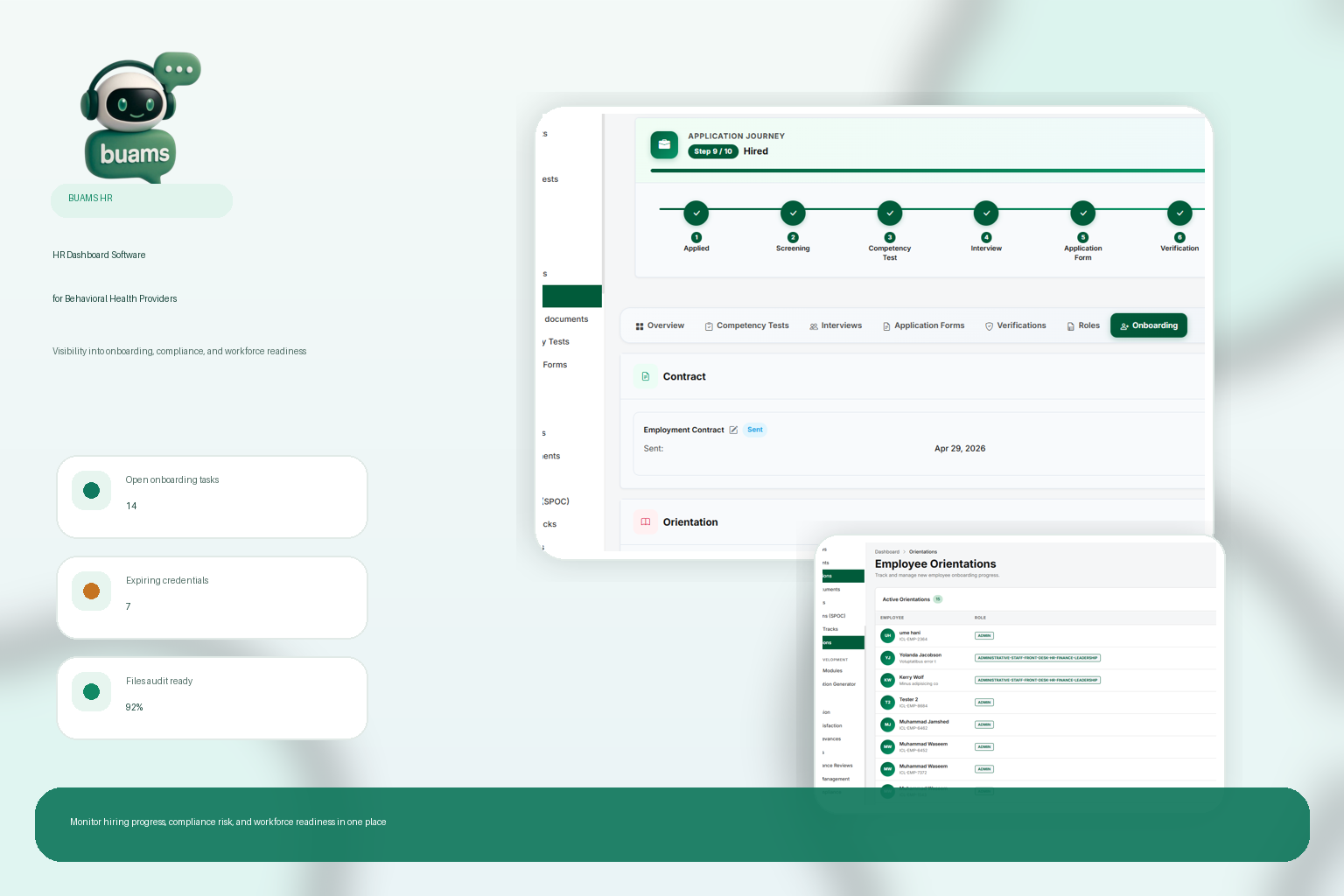
BUAMS HR helps behavioral health providers create a more connected workforce process after the hiring decision is made. Instead of treating recruiting, onboarding, employee files, and compliance as separate administrative projects, teams can manage the transition into active employment with better structure and visibility.
With BUAMS HR, organizations can support document collection, organize employee records, standardize onboarding steps, and keep workforce requirements easier to monitor over time. That matters for growing providers that need a dependable process across multiple hires, programs, or service lines.
For behavioral health leaders, the real value is not just saving clicks. It is building a hiring and HR operation that reduces delays, improves consistency, and gives staff a stronger first experience with the organization.
Final Thoughts
Applicant tracking software can improve hiring speed, but behavioral health organizations get the best results when recruiting connects to the rest of the HR workflow. Faster hiring is helpful. Faster hiring with cleaner onboarding, better records, and stronger compliance follow-through is much more valuable.
As providers look for ways to compete for talent and reduce avoidable delays, a connected system can make the difference between a rushed process and a reliable one. BUAMS HR supports that next step by helping teams turn hiring momentum into organized workforce readiness.